
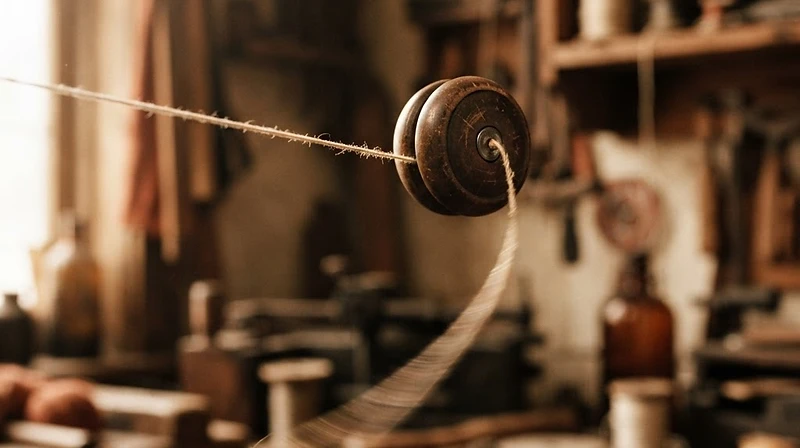
Yo-Yo
The world's oldest skill toy, and the most pocketable path to flow.
But first, a little context and history...
The yo-yo is among the oldest toys in human history. A terracotta disc on a string appears in ancient Greek vase paintings dating to around 500 BCE, where it was known as a 'disc' — boys offered their yo-yos to the gods upon coming of age, and the toy was considered a rite of passage. Similar objects have been found in ancient China and the Philippines, where the word 'yo-yo' is believed to originate, meaning 'come back' or 'return' in an indigenous Philippine language.
The modern yo-yo as we know it emerged in the late 1920s, when Pedro Flores, a Filipino immigrant in the United States, began manufacturing the toy with a looped string that allowed it to 'sleep' at the bottom — the innovation that made tricks possible. Flores patented the design, and in 1928 a businessman named Donald Duncan saw the potential, buying Flores's company and trademark. Duncan's marketing genius — traveling demonstrators, contests, and the slogan 'If it isn't a Duncan, it isn't a yo-yo' — turned the toy into a national craze during the Great Depression, selling tens of millions of units.
The next revolution came in the 1980s and 1990s, when the introduction of ball-bearing axles and transaxle designs dramatically increased spin times, opening the door to modern 'string tricks' — complex manipulations where the yo-yo never returns to the hand but instead dances along the string in loops, mounts, and whips. The World Yo-Yo Contest, held annually since 1992, became the proving ground for this new art form, and today's competitive yo-yoing is closer to juggling or dance than to the up-and-down toy most people remember from childhood.
For the empty nester, the yo-yo offers something rare: a skill toy that is genuinely meditative, pocketable, and endlessly deep. The learning curve is forgiving at first — a sleeper takes an afternoon — but the ceiling is astronomical, with world champions spending a decade refining routines. It is one of the few hobbies that can be practiced in a hallway, on a walk, or in a waiting room, and the tactile pleasure of a well-tuned yo-yo sleeping at the end of its string is a small, reliable satisfaction.
“Every trick is just a sleeper that forgot to come home.”
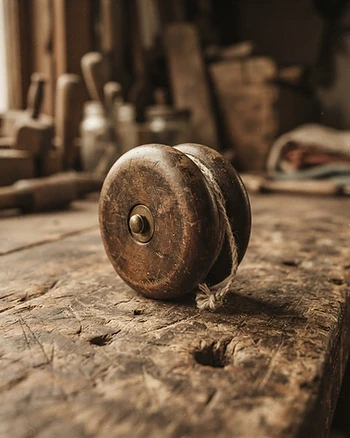
What to gather
A graded list of gear — from the first honest kit to the tools of a life in the craft. The Novice kit is free; the deeper tiers open with membership.
Novice
The first kit — enough to begin honestly.
From novice to proficient
A thirty-day passage. Each node is a day. The terracotta fill marks the ground you have already covered.
Understanding how to properly attach the string and adjust the loop for optimal play.
YouTubeThe Anatomy of the Yo-Yo
WWU ThrowersHow does the tension of the string affect the way the yo-yo returns to your hand?
Saved locally to your device


How the cohort practices today
The pulse is quiet — for now.
Be the first to document your Yo-Yo journey with #EmptyNexxter.