
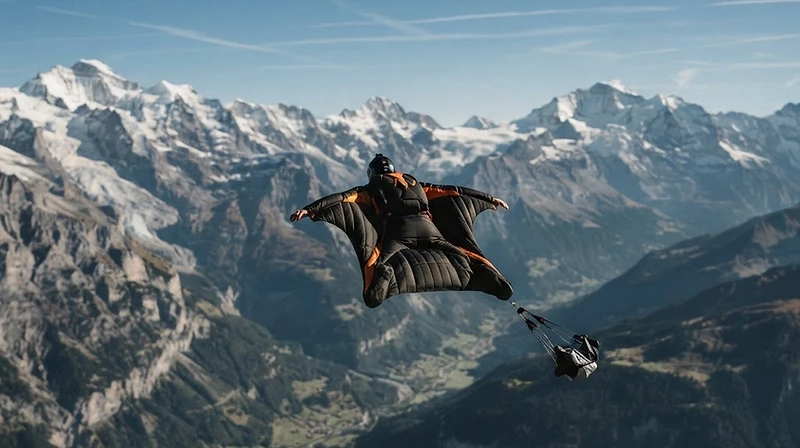
Wingsuit Flying
Master the art of the human glide, transforming a vertical descent into a graceful dance with the wind.
But first, a little context and history...
Wingsuit flying represents the pinnacle of human aerodynamics, a pursuit that allows an individual to glide through the atmosphere with avian precision. By utilizing a specialized jumpsuit equipped with fabric membranes between the legs and under the arms, a pilot increases their surface area to generate lift. This transformation turns a rapid, vertical descent into a nuanced horizontal journey, where the flyer can manipulate speed and direction with subtle shifts of the body. For the seasoned empty nester, this hobby offers a unique blend of technical mastery and meditative calm, providing a profound connection to the vastness of the sky that few other experiences can replicate.
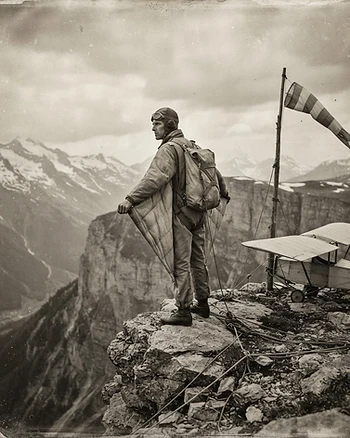
The genesis of this craft lies in the daring, often tragic, experimentation of the early 1900s. Franz Reichelt, an Austrian tailor, famously attempted to test a wearable parachute suit by jumping from the Eiffel Tower in 1912. While his effort ended in disaster, it underscored the persistent human desire to defy gravity through personal innovation. In the 1930s, pioneers like Rex Finney developed 'bat-wing' gliders, utilizing wood and canvas to add lift to parachute jumps. These early risk-takers laid the essential groundwork for modern aeronautical understanding, though the primitive materials of the era made consistent flight nearly impossible.
Technological progress stagnated until the mid-1990s, when French skydiver Patrick de Gayardon revolutionized the sport. By incorporating ram-air technology—pressurized cells that maintain the wing's shape—into his suit designs, de Gayardon enabled genuine gliding rather than mere falling. His successful tests proved that a human could navigate the air with stability and control. This breakthrough shifted the discipline from a stunt-oriented curiosity into a sophisticated aeronautical craft, setting the standard for the suits manufactured today.
Modern wingsuit flying is typically practiced in two distinct environments: skydiving from aircraft or proximity flying from fixed objects, known as BASE jumping. Skydivers use the suit to extend their freefall time, turning an exhilarating drop into a long-distance cruise across the clouds. BASE jumping, reserved for highly experienced practitioners, involves launching from cliffs or mountains and navigating terrain at high speeds. Safety remains the highest priority, requiring extensive training, rigorous equipment checks, and an intimate knowledge of wind currents and meteorology.
Required equipment is both specialized and precise. The wingsuit itself is tailored to the pilot's body, constructed from durable, lightweight, ripstop nylon. Beneath this, the flyer wears a sophisticated parachute system designed for rapid, reliable deployment. Pilots often utilize high-precision altimeters and GPS devices to monitor their glide ratio and altitude. These tools transform the experience from an intuitive feeling into a measurable data set, allowing pilots to refine their technique with each subsequent flight.
For those entering the hobby during their second act of life, wingsuit flying demands a level of mental acuity and focus that keeps the mind sharp. It is not merely about physical stamina; it is a discipline of patience, breathing, and spatial awareness. The empty nester, often seeking a challenge that requires lifelong dedication rather than short-term gains, finds a perfect match in this technical pursuit. The quiet of the air, away from the noise of terrestrial life, offers a rare, meditative sanctuary for those who have mastered their craft.
Ultimately, wingsuit flying celebrates the transition from the frantic pace of raising a family to the deliberate, controlled pace of personal exploration. Every flight reinforces the reality that the world is vast and that one's capacity for growth remains limitless. Whether soaring over mountain ridges or cruising through the stratospheric sky, the pilot discovers that the air provides a perspective unattainable from the ground. It is an invitation to inhabit the sky, not as a visitor, but as a temporary, graceful resident.
“Gravity is no longer an adversary; once you master the suit, the air becomes your runway.”
What to gather
A graded list of gear — from the first honest kit to the tools of a life in the craft. The Novice kit is free; the deeper tiers open with membership.
Novice
The first kit — enough to begin honestly.
From novice to proficient
A thirty-day passage. Each node is a day. The terracotta fill marks the ground you have already covered.
Understand the craft: the suit, the glide, the line, the parachute. Tour the gear and the sky. Today is orientation; the flight begins with study, not a jump.
YouTubeThe Craft and the Sky
Dom.e WingsuitReflect on the difference between a standard skydive and a wingsuit flight. How does the added surface area change your perception of the sky?
Saved locally to your device


How the cohort practices today
The pulse is quiet — for now.
Be the first to document your Wingsuit Flying journey with #EmptyNexxter.