
Whiskey Tasting
Unlock the liquid history within your glass, where patience meets the profound complexity of the grain.
But first, a little context and history...
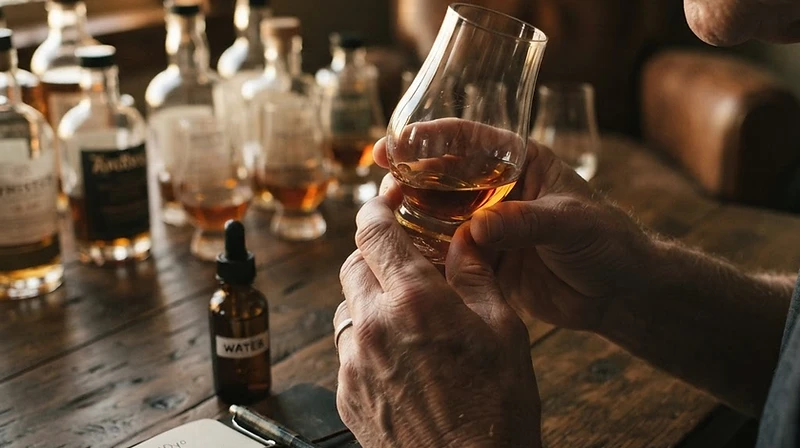
Whiskey tasting serves as an exquisite bridge between history and sensory exploration. At its heart, it is the disciplined practice of identifying the nuanced aromatic profiles and flavor notes within a distilled spirit. For those entering their second prime, this hobby offers a quiet sanctuary, turning an evening pour into an intellectual and sensory excavation. You are not simply drinking; you are analyzing terroir, wood, and the mastery of the distiller. The craft traces its lineage to the late 15th century. In 1494, the Exchequer Rolls of Scotland recorded Friar John Cor, a monk at Lindores Abbey, being granted malt to create aqua vitae—the 'water of life.' While early production was rudimentary and often unaged, it set the stage for a transformation that would span centuries. By the time of the 1823 Excise Act in the United Kingdom, the process shifted from illicit cottage production to a regulated, professional industry. This legislative milestone allowed distilleries to emerge from the shadows, eventually standardizing the quality and variety of spirits available to the modern connoisseur. Across the Atlantic, the American narrative followed a distinct trajectory. By the mid-19th century, Kentucky bourbon was coming into its own, defined by a specific mash bill featuring at least 51% corn and aging in new, charred oak barrels. Figures like E.H. Taylor Jr. helped modernize production techniques during this era, ensuring that the consistency and quality of American whiskey could rival its European counterparts. This diversity provides a vast landscape for the modern empty nester to explore, ranging from the peat-heavy, maritime malts of Islay to the sweet, caramel-forward profiles of the American South. To practice this craft, you need little more than the right glassware and a splash of water. A tulip-shaped 'glencairn' glass is essential, as its tapered mouth concentrates volatile aromatic compounds, directing them toward your nose. Begin by assessing the color, which hints at the cask type—ex-bourbon barrels often impart golden, honeyed tones, while sherry casks lean toward deep mahogany and dried fruit. A few drops of room-temperature, distilled water serve as a chemical catalyst, breaking the surface tension of the spirit to release hidden esters that alcohol intensity typically masks. When you nose the spirit, focus on the primary, secondary, and tertiary scents. You might discover notes of vanilla, orchard fruits, or toasted bread in a smooth Speyside scotch, or perhaps leather, tobacco, and campfire smoke in a robust peated whisky. After nosing, take a small sip and let it coat your palate. Note the mouthfeel—is it oily, crisp, or drying? The finish, or the 'aftertaste,' reveals the final impressions of the spirit, lingering long after the liquid has vanished. Keep a dedicated notebook to record these findings; documenting your palate's evolution is half the journey. For the Gen X individual navigating the freedom of an empty nest, whiskey tasting offers a deliberate pace that stands in contrast to the frenetic energy of previous decades. It encourages solitude and reflection, yet it remains a deeply communal hobby that sparks excellent conversation. Whether you are hosting a tasting flight for friends or exploring a specific distillery’s regional output in quiet contemplation, the pursuit of the perfect dram provides a rewarding challenge. It is a hobby that respects the maturity of your palate while inviting you to learn for the rest of your life.
“A fine dram does not merely occupy the glass; it demands your full attention, rewarding curiosity with a map of its own creation.”

What to gather
A graded list of gear — from the first honest kit to the tools of a life in the craft. The Novice kit is free; the deeper tiers open with membership.
Novice
The first kit — enough to begin honestly.
From novice to proficient
A thirty-day passage. Each node is a day. The terracotta fill marks the ground you have already covered.
Understand the craft: the glass, the nose, the water, the finish. Tour the dram and the glass. Today is orientation; the tasting begins tomorrow.
YouTubeThe Craft and the Dram
Whiskey TribeReflect on your initial expectations for this course. What specific aspect of the whiskey tasting process are you most curious to master?
Saved locally to your device


How the cohort practices today
The pulse is quiet — for now.
Be the first to document your Whiskey Tasting journey with #EmptyNexxter.