
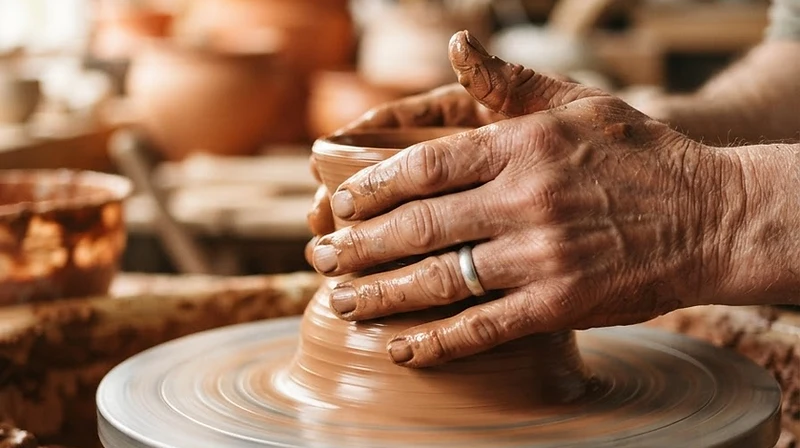
Wheel Thrown Pottery
Centering clay, and in doing so, centering yourself.
But first, a little context and history...
The potter's wheel arrived in Mesopotamia around 3500 BCE, a turntable born of the same grain-storing impulse that gave us writing. Before the wheel, coils of clay were pinched and paddled into vessels that held a village through winter.
What began as utility became language. The Greeks named their painters after the potters who gave them surface. Song dynasty celadon, Etruscan bucchero, the tea bowls of Raku — each culture left its fingerprint in fired earth.
The wheel is a meditation on centering. The clay resists, then yields; the hand learns to listen before it learns to push. For the empty nester, the studio offers something rare: a problem that cannot be solved by thinking, only by feel.
“The clay teaches the hand what the mind already suspected — that pressure, timed correctly, becomes form.”
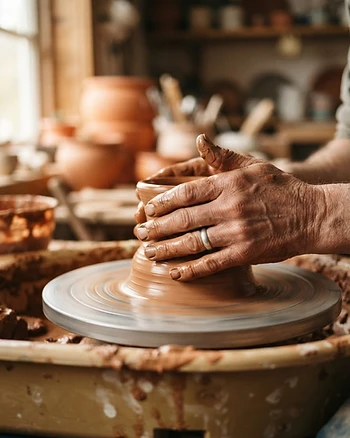
What to gather
A graded list of gear — from the first honest kit to the tools of a life in the craft. The Novice kit is free; the deeper tiers open with membership.
Novice
The first kit — enough to begin honestly.
Expert
The equipment of a life in the craft.
Coming soon
From novice to proficient
A thirty-day passage. Each node is a day. The terracotta fill marks the ground you have already covered.
Wedging and the discipline of centering clay on the wheel.
YouTubeThe First Center
Hsin-Chuen LinHow did your body feel while trying to maintain pressure against the spinning clay? Reflect on the balance between physical force and gentle guidance.
Saved locally to your device


How the cohort practices today
Thirty days in and I finally centered on the first try. The muscle memory is real.
First time at the wheel. The clay won today, but I will be back tomorrow. #EmptyNexxter