
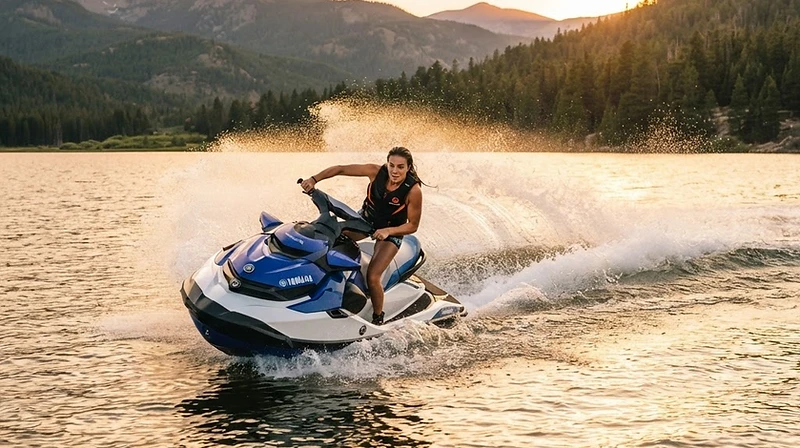
Waverunner & Jetski
The motorcycle of the sea — back it down a ramp, climb on, and feel the pump grab clean water for the first time.
But first, a little context and history...
The personal watercraft is the motorcycle of the sea — a standing or sitting craft powered by a jet pump that takes in water and shoots it out the back, producing thrust without a propeller, and delivering a combination of speed, agility, and accessibility that no other water vehicle can match. You do not need a trailer, a slip, or a crew to ride one. You back it down a ramp, climb on, and go, and the distance between your first throttle squeeze and a planing turn across open water is about thirty seconds.
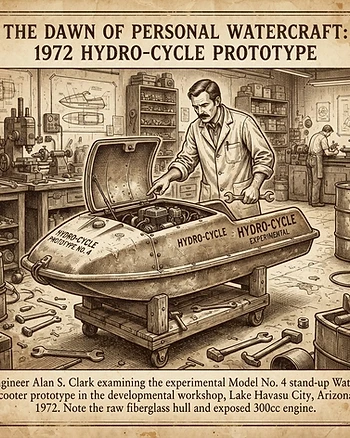
The personal watercraft was invented by Clayton Jacobson II, an American motocross enthusiast who wanted to ride on water the way he rode on dirt. Jacobson built the first stand-up personal watercraft prototype in the early 1970s — a fiberglass shell with a Kawasaki motorcycle engine driving a jet pump — and licensed the design to Kawasaki, which launched the Jet Ski in 1973. The original Jet Ski was a stand-up craft ridden by a single person who stood on a small platform and steered with handlebars, and it was as difficult to ride as it was fun: the rider had to balance, steer, and manage the throttle all at once, and falling off was part of the learning curve. The stand-up Jet Ski created the sport of personal watercraft racing and freestyle, and it remains the discipline that competitive riders compete in today.
The sit-down personal watercraft — the form that most people now think of as a jetski or waverunner — was introduced by Yamaha in 1986 with the WaveRunner, a craft that let the rider sit on a seat and steer with handlebars the way they would on a motorcycle. The sit-down design transformed the personal watercraft from a sport for athletes into an activity for families, and within a decade the market had exploded. Sea-Doo, Kawasaki, and Yamaha produced millions of sit-down craft, and rental fleets appeared at every lake, river, and coastal resort in the world. The modern sit-down personal watercraft can carry three riders, hit sixty miles per hour, and travel fifty miles on a tank of fuel — a machine that fits on a trailer behind a sedan and delivers more fun per dollar than any boat in the marina.
The technology that makes a personal watercraft work is the jet pump, and understanding it is the key to riding well. The pump draws water in through an intake grate on the bottom of the hull, accelerates it through an impeller, and forces it out through a nozzle at the rear. The nozzle pivots left and right, and because the thrust comes from the nozzle, the craft steers by directing the thrust — which means that a personal watercraft only steers when the throttle is open. Let go of the throttle and the craft goes straight, no matter how hard you turn the bars. This is the single most important thing a new rider learns, and the reason why: every personal watercraft accident that is not a collision is caused by a rider who let off the throttle when they needed to turn and discovered too late that they could not.
The modern personal watercraft community spans three worlds. Recreational riders rent craft at lakes and beaches for an afternoon of open-water fun. Performance riders modify their craft for racing and freestyle, competing in closed-course buoy races and freestyle competitions where riders launch off waves and perform aerial tricks. And long-distance touring riders use the largest, most stable craft to explore coastlines and island chains, covering a hundred miles in a day and beaching the craft on sandbars and islands that no boat can reach. The craft that Clayton Jacobson built to ride like a motorcycle has become all three — a toy, a sport, and a vehicle — and the only thing every rider has in common is the grin they wear when the hull lifts out of the water and the pump grabs clean water and the craft accelerates away from the dock.
“Every personal watercraft steers with the throttle. Let go of the throttle and the craft goes straight, no matter how hard you turn the bars.”
What to gather
A graded list of gear — from the first honest kit to the tools of a life in the craft. The Novice kit is free; the deeper tiers open with membership.
Novice
The first kit — enough to begin honestly.
Advanced
The serious tools of a committed hand.
Coming soon
Expert
The equipment of a life in the craft.
Coming soon
From novice to proficient
A thirty-day passage. Each node is a day. The terracotta fill marks the ground you have already covered.
Verifying readiness through mandatory equipment checks and kill-switch testing.
Safety Gear and Pre-Ride Audit
What specific item in your pre-ride checklist felt the most overlooked before this practice?
Saved locally to your device


How the cohort practices today
The pulse is quiet — for now.
Be the first to document your Waverunner & Jetski journey with #EmptyNexxter.