
Watercolor Painting
The medium that cannot be controlled, only partnered — pigment, water, and paper, and the slow art of letting the paint do what it wants.
But first, a little context and history...
Watercolor is the medium that cannot be controlled, only partnered, and it is the medium that taught the artist to work with chance. The paint is pigment suspended in a binder that dissolves in water, and the water that carries it onto the paper is the water that decides where it goes. The artist who fights the water loses; the artist who lets the water move finds the painting the water wanted to make. The medium is the oldest of the paints — older than oil, older than tempera — and it is the medium that the artist returns to when the control of the other paints becomes a cage.
The history of watercolor begins with the pigments themselves, and the pigments are as old as the human hand. The oldest pigments are the earth pigments — the ochres, the umbers, the siennas — and they are the iron oxides that the cave painters of Lascaux and Altamira ground and mixed with water and binder and blew through a tube onto the wall, 40,000 years ago. The binder that the cave painters used was probably saliva or animal fat, and the binder that the watercolorist uses is gum arabic — the sap of the acacia tree — which dissolves in water and dries clear and holds the pigment to the paper. Gum arabic was in use in Egypt by 2500 BCE, and the papyrus that the Egyptians painted on is the first paper-like support, and the illuminated manuscripts of the medieval monasteries — the Book of Kells, the Très Riches Heures — are the first watercolors in the modern sense, painted with gum arabic on vellum.
The artist who turned watercolor from a medium of illustration into a medium of art was Albrecht Dürer, and the year that matters is 1502, when he painted 'The Great Piece of Turf,' a study of a clump of grass that is the first watercolor treated as a finished work. Dürer had learned the medium from the manuscript illuminators of Nuremberg, and he used it for the studies from nature that he made on his travels — the views of the Alps, the animal and plant studies, the portrait of a hare — and he showed that watercolor could be a medium of close observation and of finished art. The medium that Dürer opened was the medium that the next four centuries would build on, and the two schools that built it most were the English and the American.
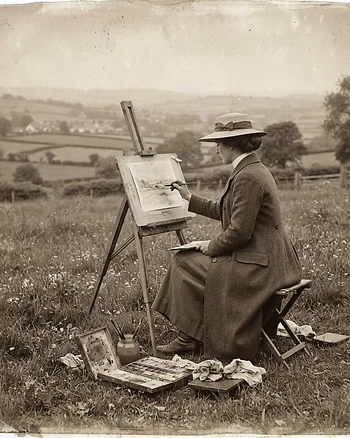
The English school of watercolor is the school that made the medium, and the two painters who defined it are J.M.W. Turner and John Constable. Turner (1775–1851) is the painter who pushed watercolor to its limit — the washes that dissolve into light, the storms that dissolve into air, the skies that are more water than paint — and his watercolors of the Alps, of Venice, and of the English countryside are the works that showed what the medium could do when the artist let the water lead. Constable (1776–1837) is the painter who used watercolor for the direct study of the sky, and his cloud studies, painted on Hampstead Heath in the 1820s, are the first paintings made from nature with the intention of capturing a moment of weather. The English school made watercolor a medium of the landscape and of the sketch from nature, and the watercolor box that the English gentleman carried on his tour of the Continent is the direct ancestor of the watercolor box that every painter carries today.
The American school of watercolor is the school that made the medium modern, and the two movements that defined it are the California watercolorists and the American realists of the mid-twentieth century. The California watercolorists — Millard Sheets, Rex Brandt, Phil Dike — painted the landscape and the coast of California in the 1930s and 1940s, in a style of broad washes and direct painting that was shaped by the light and the air of the Pacific. The American realists — Edward Hopper, Andrew Wyeth, Charles Burchfield — used watercolor for the direct study of the American scene, and Hopper's watercolors of Cape Cod and Wyeth's watercolors of the Brandywine are the works that showed that watercolor could carry the weight of the American landscape. The medium that the English school made a medium of the landscape became, in the American school, a medium of the place and the moment, and the watercolor that is painted today is painted in the tradition these painters built.
The three things that the watercolorist works with are the pigment, the paper, and the water, and the choice of each is the choice that the painter makes. The pigment is the color, and the pigments are the paints in the box — the transparent pigments (the ones that let the paper show through) and the opaque pigments (the ones that cover it). The paper is the support, and the paper is the thing that makes watercolor watercolor: it is the cotton or the wood-pulp sheet that absorbs the water and holds the pigment, and the weight and the texture of the paper (cold-pressed, hot-pressed, rough) are the texture of the painting. The water is the medium, and the water is the thing that the painter learns to control — the amount, the timing, the wetness of the paper — and the control of the water is the skill that the watercolorist spends a lifetime learning. The three together — pigment, paper, water — are the trinity of the medium, and the painter who understands how they work together is the painter who can let the water do what it wants.
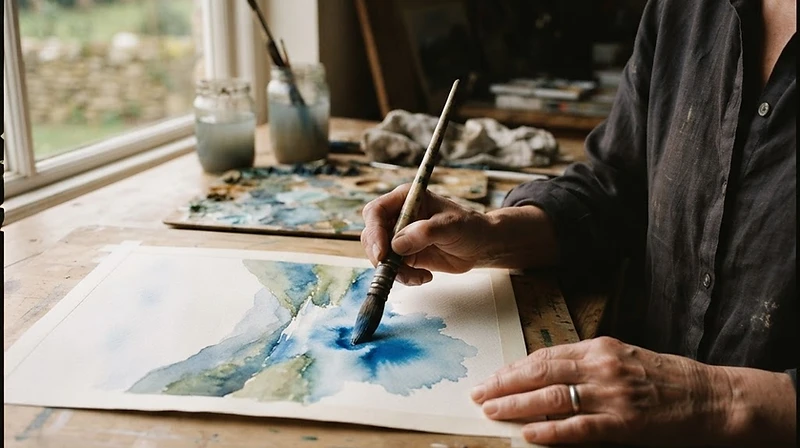
For the empty nester, watercolor is the medium that rewards the patient eye and the quiet hour. The materials are few — a box of paints, a brush, a pad of paper, a jar of water — and the place is any table by a window. The medium teaches the eye to see the light and the hand to let go, and the patience it asks is the patience of the wash and the dry, not the patience of the screen. The first painting is a flat wash that runs, and the last painting is a sky that holds, and the distance between them is the distance of a hundred hours at the easel. The medium does not care how old you are, and the sky that is too wet today is the sky that is your warm-up next year. Watercolor is the medium that keeps the eye and the hand soft, and it is the medium that gives you, at the end, something you can frame or give that no one else has.
“The medium does not care how old you are, and the sky that is too wet today is the sky that is your warm-up next year.”
What to gather
A graded list of gear — from the first honest kit to the tools of a life in the craft. The Novice kit is free; the deeper tiers open with membership.
Novice
The first kit — enough to begin honestly.
From novice to proficient
A thirty-day passage. Each node is a day. The terracotta fill marks the ground you have already covered.
The creator has disabled playback on external sites, or the video has been removed. Watch it directly on YouTube.
Watch on YouTubeUnderstand the trinity: pigment, paper, water. Tour your kit — the paints, the brush, the pad, the jar. Today is orientation; the painting begins tomorrow.
The Medium and the Materials
Jenna RaineyReflect on your workspace: does your current setup feel inviting, and how does the quality of your paper change your confidence in making a mark?
Saved locally to your device


How the cohort practices today
The pulse is quiet — for now.
Be the first to document your Watercolor Painting journey with #EmptyNexxter.