
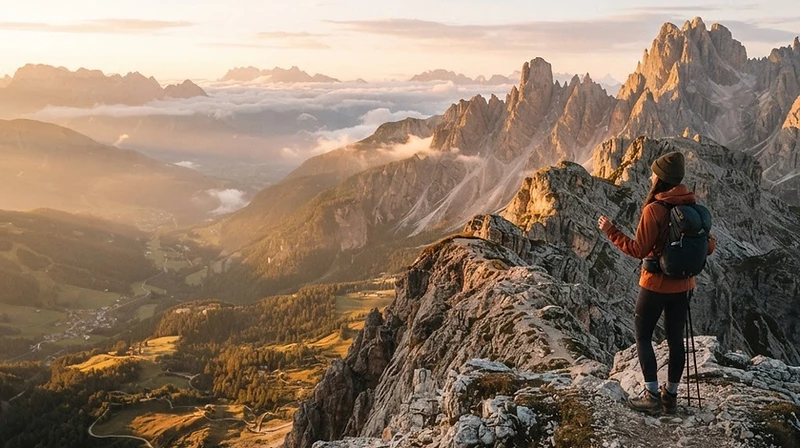
Ultralight Backpacking
Carry less, walk farther, sleep lighter — the philosophy that turned backpacking from an endurance test into a freedom.
But first, a little context and history...
Ultralight backpacking is the practice of carrying the lightest possible load on a backcountry trip — a base pack weight (everything except food, water, and fuel) under ten pounds, and sometimes under five. It is a philosophy as much as a technique: the ultralight hiker carries less, walks farther, and sleeps lighter, and the freedom of a light pack changes the experience of the trail. A forty-pound pack is a burden you carry. A ten-pound pack is a thing you barely notice.
The modern ultralight movement was born in the 1990s, and it was born from one man's walk. Ray Jardine was already a legend in the climbing world — he had invented the Friend, the spring-loaded camming device that revolutionized rock climbing protection in the 1970s — when he and his wife Jenny hiked the Pacific Crest Trail in 1994. They carried base packs of 8.5 pounds each, and they completed the 2,650-mile trail in three and a half months. Jardine published his methods in 1992 in a book called The Pacific Crest Trail Hiker's Handbook, later revised as Beyond Backpacking, and the book was a manifesto: the gear industry had convinced backpackers that they needed heavy, durable, feature-rich equipment, and Jardine argued that the opposite was true. You needed less. You needed lighter. You needed to think about every item in your pack and ask whether it earned its weight.
Jardine's methods were radical for the time. He made his own gear — a tarp instead of a tent, a quilt instead of a sleeping bag, a frameless pack instead of an external-frame monster. He used a soda-can alcohol stove that weighed less than an ounce. He cut the handle off his toothbrush. He wore running shoes instead of boots. Every choice was an argument: boots cause blisters because they are heavy and stiff; running shoes let your feet move naturally. A tent is a heavy shelter that traps condensation; a tarp is a light shelter that breathes. A sleeping bag has a zipper and a hood you do not need; a quilt is a bag without the parts you do not use. The book was controversial — the gear industry pushed back, and traditional backpackers dismissed Jardine as a crank — but the ideas were correct, and they spread.
The ultralight gear industry grew up around Jardine's ideas. In the early 2000s, small cottage manufacturers — Six Moon Designs, Gossamer Gear, Mountain Laurel Designs, Hyperlight Mountain Gear — began making tarps, quilts, and frameless packs for the growing community of hikers who wanted to go light. The big brands followed: REI, Osprey, and Big Agnes all introduced ultralight lines, and the technology of lightweight fabrics — Dyneema Composite Fabrics, silnylon, and high-tenacity nylon — made it possible to build shelters and packs that were both lighter and stronger than anything that came before.
The philosophy of ultralight is not about deprivation. It is about intention. The ultralight hiker does not suffer — in many ways, they are more comfortable than the heavy packer. A light pack means less sweat, less fatigue, fewer blisters, and more energy at the end of the day. It means you can hike faster and farther, or hike the same distance with more enjoyment. It means you can stop where you want, eat where you want, and camp where you want, because you are not looking for a flat spot big enough for a six-pound tent. The ultralight hiker trades the security of heavy gear for the freedom of light gear, and the trade is almost always worth it.
The core principle is simple: weigh everything. Every item in your pack goes on a kitchen scale, and the total is your base pack weight. The standard categories are: shelter (tarp, tent, or bivy), sleep system (quilt or bag, pad), pack, cooking (stove, pot, fuel), and clothing. The big three — shelter, sleep, pack — are where most of the weight is, and where the biggest savings are. A traditional big three might weigh twelve pounds total. An ultralight big three weighs four. That eight-pound difference is the difference between a heavy pack and a light one, and it is the first thing the ultralight hiker changes.
For the empty nester, ultralight backpacking is a way to keep walking the wild places without the punishment of a heavy load. The knees are not what they were, and a forty-pound pack that was an adventure at thirty is an ordeal at fifty. A ten-pound pack is a walk in the woods. The first day is weighing your gear and cutting what you do not need. The hundredth day is a tarp on a ridge in the Wind Rivers, the pack leaning against a tree, and the feeling that you could walk another ten miles — and you might.
“A forty-pound pack is a burden you carry. A ten-pound pack is a thing you barely notice.”
What to gather
A graded list of gear — from the first honest kit to the tools of a life in the craft. The Novice kit is free; the deeper tiers open with membership.
Novice
The first kit — enough to begin honestly.
From novice to proficient
A thirty-day passage. Each node is a day. The terracotta fill marks the ground you have already covered.
Understand the history and core mindset of ultralight backpacking, moving from endurance to freedom.
YouTubeThe Ultralight Philosophy
JupiterHikesWhat is your primary motivation for wanting to lighten your pack?
Saved locally to your device


How the cohort practices today
The pulse is quiet — for now.
Be the first to document your Ultralight Backpacking journey with #EmptyNexxter.