
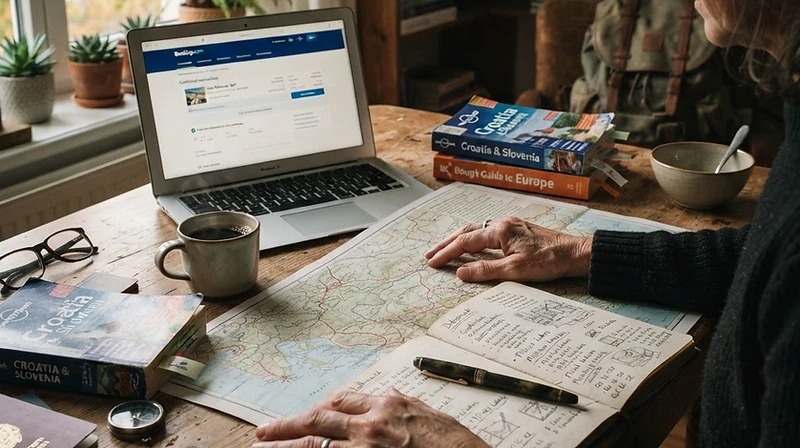
Travel Planning
Architects of the odyssey: Curating the passage from idle dreaming to the sovereign journey.
But first, a little context and history...
Travel planning is the intellectual architecture of the journey, transforming raw curiosity into a deliberate passage. It requires a meticulous orchestration of time, geography, and personal interest to construct an experience that feels both discovered and earned. For the Gen X empty nester, this hobby offers a unique intellectual reward, turning the act of preparation into a vessel for rediscovering one’s autonomy after years of navigating the hectic schedules of family life. Whether you are charting the path of Roman aqueducts or scouting small-town vineyards, the plan itself serves as the inaugural chapter of your adventure. The roots of this craft lie in the Grand Tour, a rite of passage for young European aristocrats beginning in the 17th century. Accompanied by tutors, these travelers traversed the continent to engage with the classical ruins of Italy, the galleries of France, and the social courts of the Alps. This was not a mere vacation; it was an intensive education in art, architecture, and diplomacy. These travelers meticulously chronicled their routes in leather-bound journals, mapping out months of transit with sketches and detailed itineraries. This period established the fundamental pillars of travel planning: the search for cultural depth, the necessity of a structured route, and the commitment to documenting the experience. By the 19th century, the democratization of travel shifted the craft from aristocratic necessity to middle-class aspiration. Innovators like John Murray and Karl Baedeker introduced the modern guidebook, providing detailed, reliable assessments of hotels, monuments, and transport. These portable red-bound volumes liberated travelers from reliance on specialized tutors, allowing for independent navigation of foreign lands. Simultaneously, figures like Thomas Cook transformed travel into a logistical industry, organizing train excursions that removed the friction of logistical guesswork. This era proved that travel was no longer a chaotic risk, but a manageable enterprise for anyone with the ambition to organize it. Today, the tools of the trade have transitioned from paper maps to digital ecosystems. We employ collaborative platforms, high-fidelity mapping software, and immersive archival databases to preview our destinations. Yet, the core equipment remains timeless: a dedicated physical notebook for capturing intent, a reliable calendar, and an appetite for primary source research. The modern practitioner does not merely click 'book' on an app; they curate a narrative of their own making. They study the topography, learn the local rhythm, and decide which sites warrant a lingering afternoon versus a fleeting glance. This hobby is uniquely suited for the current stage of life. As household responsibilities wane, we find ourselves with the luxury of time to research deeply and the perspective to appreciate the nuances of history and culture. Travel planning offers a structured way to reclaim your curiosity and project your personal values onto the world map. It satisfies the desire for intellectual stimulation while providing the tangible result of a well-executed escape. By investing your winter evenings in the art of the itinerary, you ensure that your journey is not just a departure, but a meaningful expansion of your Second Prime.
“A well-wrought itinerary is not a tether, but a compass; it grants you the freedom to choose your own deviations.”
What to gather
A graded list of gear — from the first honest kit to the tools of a life in the craft. The Novice kit is free; the deeper tiers open with membership.
Novice
The first kit — enough to begin honestly.
Expert
The equipment of a life in the craft.
Coming soon
From novice to proficient
A thirty-day passage. Each node is a day. The terracotta fill marks the ground you have already covered.
Understand the craft: the research, the booking, the pacing, the plan. Tour the notebook, the map, the guidebook, the booking site. Today is orientation; the plan begins tomorrow.
YouTubeThe Craft and the Journey
The Travel CoachesWhat is the primary goal you hope to achieve by learning to plan your own travel, and how does this change your perspective on the journey ahead?
Saved locally to your device


How the cohort practices today
The pulse is quiet — for now.
Be the first to document your Travel Planning journey with #EmptyNexxter.