
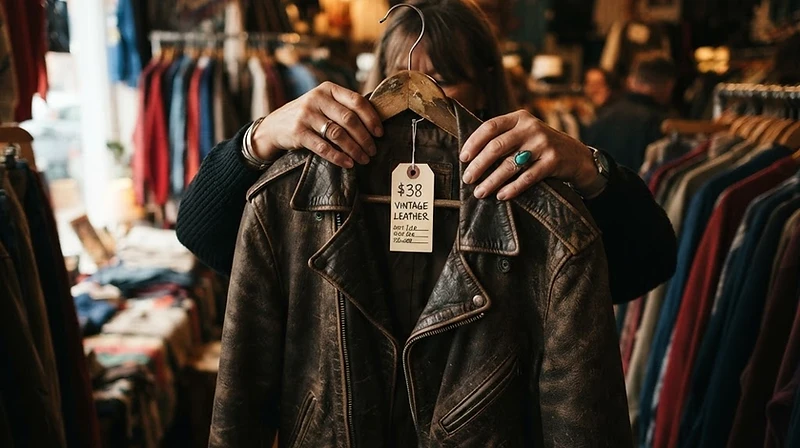
Thrifting
The art of the curated find: Transforming forgotten textiles and objects into a storied collection.
But first, a little context and history...
Thrifting is an act of historical preservation as much as it is a pursuit of personal style. At its core, the practice involves scouring secondary markets for hidden gems that have been discarded by their original owners. What begins as a casual search through metal racks often evolves into a sophisticated hobby, requiring a sharp eye for quality fabrics, historical trends, and potential restoration. For a Gen X empty nester, this hobby offers a unique blend of intellectual stimulation and tactile satisfaction, providing a sanctuary of discovery away from the digital noise of modern life.
The lineage of the modern thrift store traces back to the industrialization of the late 19th century. In 1897, Captain Joseph McFee of the Salvation Army launched the first 'Salvation Army Salvage Brigade' in San Francisco. Recognizing that the poor lacked basic necessities, he solicited donations of discarded clothing and household items to be repaired and sold at modest prices. This model proved so successful that it provided the blueprint for charitable resale operations nationwide. By the 1930s, organizations like Goodwill Industries—which had roots in early 20th-century Boston—expanded this concept further, professionalizing the collection and distribution process during the Great Depression. These early stores served as vital community hubs, teaching participants that reuse was a noble and practical virtue.
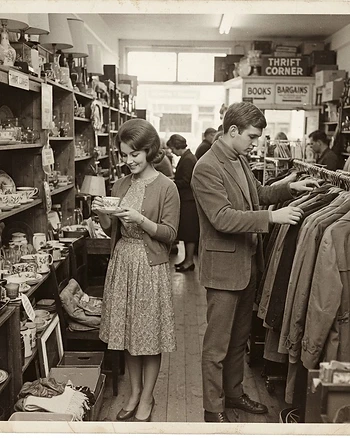
Following the mid-century expansion, the 1990s marked a pivotal turning point for the hobby. As grunge culture and sustainable fashion gained momentum, younger generations began to view thrift stores not as centers of charity, but as treasure troves for unique, vintage garments. This period transformed 'thrifting' from a socio-economic necessity into a stylistic statement. It gave rise to a new appreciation for mid-century design, eclectic patterns, and the craftsmanship of previous decades. The era of the vintage revival established the thrill of the hunt, reinforcing the idea that beauty often lies in the overlooked remnants of the past.
Practicing this craft today is remarkably accessible, requiring little more than patience, a reliable pair of walking shoes, and a discerning gaze. Beginners should start by familiarizing themselves with textile labels and construction techniques. Understanding how seams are finished or how buttons are attached can often signal the age and quality of a piece. Carrying a measuring tape is a professional touch, as vintage sizing rarely aligns with contemporary vanity sizing. Successful thrifting is less about finding a specific item and more about cultivating the ability to spot potential amidst the mundane clutter of the sales floor.
Why does this pursuit resonate so deeply with the empty nester? As the home environment shifts from a busy hub of family activity to a space of quiet transition, thrifting provides an opportunity to curate an environment that reflects personal identity rather than just household utility. It encourages an analytical approach to aesthetics. You are no longer shopping for the masses; you are selecting items that carry narrative weight. The act of sourcing these items provides a rhythmic, meditative quality that anchors the day, turning a simple errand into a focused search for hidden history.
Ultimately, thrifting is a reclamation of time and taste. It stands in direct opposition to the disposable nature of fast-fashion culture, championing the longevity of well-made goods. By integrating older pieces into your current lifestyle, you maintain a tangible connection to the past while refining your vision for the future. Whether you are searching for rare vinyl, antique brass, or a tailored coat from a bygone era, the rack remains a gatekeeper to a world of endless possibility. As you navigate the aisles, remember that each find represents a thread in a larger, evolving tapestry of human experience.
“A thrift store is a curated gallery of history where every item is waiting for someone to recognize its second life.”
What to gather
A graded list of gear — from the first honest kit to the tools of a life in the craft. The Novice kit is free; the deeper tiers open with membership.
Novice
The first kit — enough to begin honestly.
Expert
The equipment of a life in the craft.
Coming soon
From novice to proficient
A thirty-day passage. Each node is a day. The terracotta fill marks the ground you have already covered.
Understand the craft: the rack, the tag, the find, the flip. Tour the store and the section. Today is orientation; the thrift begins tomorrow.
YouTubeThe Craft and the Aisle
Nicole RossiReflect on your local thrift store layout; what sections felt most inviting, and which ones did you find overwhelming during your orientation?
Saved locally to your device


How the cohort practices today
The pulse is quiet — for now.
Be the first to document your Thrifting journey with #EmptyNexxter.