
Tennis
Precision on the baseline: rediscover the rhythm, the grace, and the enduring challenge of the court.
But first, a little context and history...
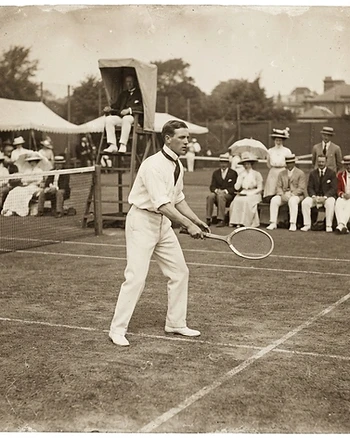
Tennis represents the perfect convergence of geometry, physics, and human endurance. At its core, the game is an elegant tactical duel, pitting two individuals against one another within the confines of a precisely marked rectangle. While modern players often focus on the power of the serve, the true essence of the sport lies in the rally—a rhythmic exchange that requires equal parts patience, anticipation, and athletic composure. For the empty nester, this sport provides far more than mere exercise; it offers a mental reset, stripping away the complexities of daily life and leaving only the immediate necessity of the ball and the line. The ancestral roots of tennis trace back to the twelfth century in France, where monks played 'jeu de paume,' or game of the palm, using their bare hands to strike a ball against monastery walls. By the sixteenth century, the game had migrated to the royal courts of Europe, incorporating rackets and refined rules favored by monarchs like Henry VIII. However, the iteration we recognize today—lawn tennis—emerged in the Victorian era as an outdoor alternative to these enclosed, aristocratic indoor courts. In 1873, Major Walter Clopton Wingfield patented a portable kit that included a net, rackets, and rubber balls, designed specifically for the manicured lawns of English country estates. His hourglass-shaped court design was soon adapted into the standard rectangular format we use today. By 1877, the All England Croquet Club hosted the inaugural Wimbledon Championship, marking the birth of competitive tennis as a structured, international discipline. The sport expanded rapidly throughout the late nineteenth and early twentieth centuries, establishing the four pillars of the modern game: the Australian Open, the French Open, Wimbledon, and the US Open. These Grand Slam tournaments represent the pinnacle of professional skill, yet they reflect the same fundamental principles that every amateur discovers upon stepping onto a local court. Whether played on the traditional grass of London, the crushed brick of Roland Garros, or the durable hard courts found in neighborhood parks, the requirements remain constant: a pair of supportive shoes, a balanced racket, and a resilient spirit. Modern equipment has made the game more accessible than ever, with carbon-fiber frames reducing arm fatigue and high-visibility balls aiding in tracking speed. For those in their second prime, tennis offers a unique cardiovascular benefit that prioritizes lateral movement and core strength, which are essential for maintaining mobility as we age. Unlike high-impact sports that demand youthful recklessness, tennis rewards experience. The ability to read an opponent, to anticipate the spin of the ball, and to manage one's own energy levels across a multi-set match is an art form that only matures with time. Stepping onto the court is an act of reclaiming your personal space and your physical agency. It is an opportunity to cultivate a practice that honors the history of the sport while building a healthier, more vibrant future. The serve that might have eluded you in your twenties becomes a deliberate, calculated weapon in your fifties. Every match presents a fresh landscape, a new set of puzzles to solve, and a quiet camaraderie with your partner or opponent that transcends the score. In a world of digital distractions and sedentary routines, the simple, percussive thwack of a tennis ball against the strings serves as an invitation to engage fully with the present moment.
“Tennis is a conversation between two rackets; if you listen closely to the sound of the strings, the game will tell you exactly where to move.”
What to gather
A graded list of gear — from the first honest kit to the tools of a life in the craft. The Novice kit is free; the deeper tiers open with membership.
Novice
The first kit — enough to begin honestly.
From novice to proficient
A thirty-day passage. Each node is a day. The terracotta fill marks the ground you have already covered.
Understand the court: the singles and doubles lines, the service boxes, the baseline, the net at 3 feet. Tour the racket, the ball, the shoes. Today is orientation; the play begins tomorrow.
YouTubeThe Game and the Court
Banana TennisReflect on the layout of the court; how does the difference between singles and doubles lines change your strategy for positioning?
Saved locally to your device


How the cohort practices today
The pulse is quiet — for now.
Be the first to document your Tennis journey with #EmptyNexxter.