
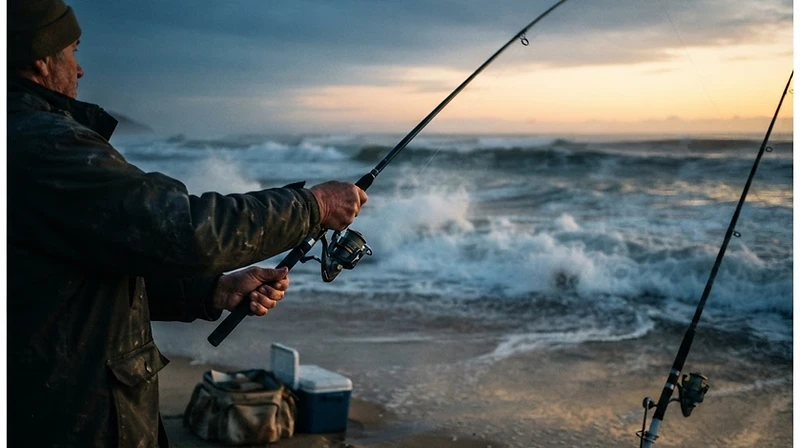
Surf Fishing
Master the rhythm of the rising tide: where the silent patience of the shoreline meets the surge of the deep.
But first, a little context and history...
Surf fishing is more than a sport; it is an intimate conversation with the perimeter of the continent. At its essence, this practice involves casting bait or lures into the breaking waves from the beach, targeting predatory species that patrol the coastal troughs. Unlike boat fishing, which relies on technology to locate schools of fish, surf fishing demands an acute sensory connection to the environment. You must learn to read the water—identifying the 'guts' or channels where deep water allows fish to migrate safely—and master the rhythm of the sandbar. It is an exercise in observation, turning a wild, churning coastline into a manageable landscape of opportunities.
The historical lineage of this pursuit stretches back over four millennia. Ancient civilizations in the Mediterranean and the Pacific Rim relied on coastal net fisheries as early as 2000 BCE, using handheld nets and weighted lines to harvest sustenance from the intertidal zone. These early practitioners were the first to understand that the shifting currents dictated the movement of marine life. By the late 19th century, Hawaiian masters revolutionized these methods, perfecting the art of the throw-net and demonstrating that a deep, fluid connection to the surf was more effective than raw physical strength. This era codified the fundamental principles of movement and timing that form the bedrock of today’s angling techniques.
The mid-20th century marked a technological turning point with the surf-casting revolution of the 1950s. The introduction of lightweight fiberglass rods and high-capacity, precision-engineered spinning reels changed everything, allowing the average angler to cast long distances with relative ease. Pioneers like the legendary Don Mook, who championed specialized long-rod designs, helped transition the activity from a localized survival skill into a popular coastal pastime. This period brought the thrill of high-performance gear to the common beachgoer, setting the stage for the modern era of refined equipment and conservation-minded catch-and-release practices.
Today, the equipment required for this hobby is both sophisticated and surprisingly accessible. You will need a sturdy spinning or conventional surf rod, typically between nine and twelve feet, paired with a corrosion-resistant reel capable of holding hundreds of yards of braided line. Essential accessories include a long-handled sand spike to hold your rod while you wait, a selection of pyramid sinkers to anchor your line against the undertow, and basic terminal tackle suited to the local species. The gear is durable and designed for the harsh saltwater environment, meaning that with proper rinsing, a quality setup can serve you for years.
For the Gen X empty nester, surf fishing offers a unique combination of solitude and active engagement. After years of managing the chaos of a full household and a demanding career, the quiet, repetitive motion of the cast provides a much-needed mental reset. It requires enough focus to clear the mind of trivial anxieties, yet leaves enough space for genuine contemplation. There is no social posturing on the sand, only the wind, the salt spray, and the hope of a bend in the rod. It serves as an invitation to engage with the natural world on your own terms, without the need for complex logistics or expensive charters.
Beyond the physical act, surf fishing provides a deep sense of autonomy. You are the architect of your own excursion, deciding when the tides are favorable and which stretch of sand offers the best chance for success. As you develop your skills, you will find that the ocean becomes a familiar companion. You begin to recognize the subtle changes in wave frequency, the specific pull of a rip current, and the precise moment when the water turns ‘alive’ with baitfish. It is a hobby that rewards experience over speed, making it an ideal pursuit for those moving into a phase of life that values depth and authenticity over the frantic pace of youth.
“The ocean does not rush, and neither should you. On the sand, the only deadline is the tide.”


What to gather
A graded list of gear — from the first honest kit to the tools of a life in the craft. The Novice kit is free; the deeper tiers open with membership.
Novice
The first kit — enough to begin honestly.
From novice to proficient
A thirty-day passage. Each node is a day. The terracotta fill marks the ground you have already covered.
Understand the craft: the cast, the hold, the strike, the tide. Tour the gear and the beach. Today is orientation; the surf begins tomorrow.
YouTubeThe Craft and the Shore
Salt StrongReflect on the gear you currently have or plan to acquire; how does the environment of the beach differ from the places you have fished before?
Saved locally to your device


How the cohort practices today
The pulse is quiet — for now.
Be the first to document your Surf Fishing journey with #EmptyNexxter.