
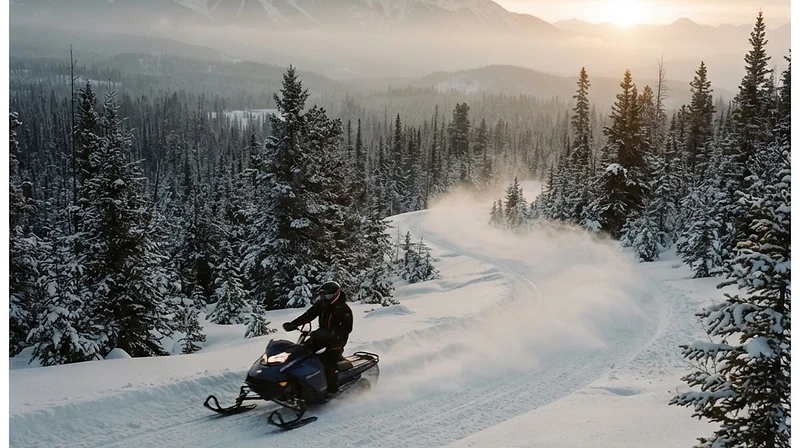
Snowmobiling
Winter, motorised — a machine that exists for the last mile, and the slickest way to see country no road bothers to reach.
But first, a little context and history...
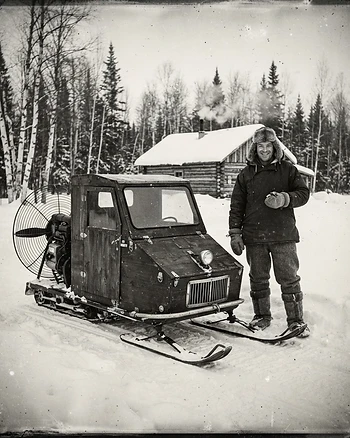
Winter travel has always been the problem snowmobiles solved. In 1924 a Wisconsin mechanic named Carl Eliason bolted a two-cylinder motorcycle engine to a wooden toboggan with a cleated track and called it the Motor Toboggan — a machine built to get trappers and mail carriers through drifts a horse could not cross. Fourteen years later, in Valcourt, Quebec, a young mechanic named Joseph-Armand Bombardier lost his infant son to illness during a winter when the roads were impassable, and set out to build something that made winter passable for everyone. His breakthrough was the sprocket-wheel rubber track, patented in 1937: a drive system that could grip snow without tearing itself apart.
For two decades these were working machines — school buses on skis, Bombardier's B-12 carrying children over snowbound roads, utility carriers hauling wood and mail and doctors. Then in 1959 the company renamed the small personal machine the Ski-Doo (a typo, legend says, for Ski-Dog), and winter became recreation. Within a decade there were hundreds of thousands of them crossing frozen lakes and old logging roads across the northern United States and Canada, and the sport grew faster than the rules could keep up.
What followed was the mundane work that makes a sport last: trail clubs, landowner agreements, grooming machines that leave a corduroy surface you can read at speed. Modern machine categories — trail, crossover, mountain, utility — each exist because a different kind of snow demands a different kind of track. In the backcountry, the sport now demands avalanche literacy the way climbing does. But the ritual remains the same one Eliason wanted: dress for the cold, pull the cord, and go where the road gives up.
“The snowmobile is a machine for the last mile — the one the road never bothers to reach.”
What to gather
A graded list of gear — from the first honest kit to the tools of a life in the craft. The Novice kit is free; the deeper tiers open with membership.
Novice
The first kit — enough to begin honestly.
From novice to proficient
A thirty-day passage. Each node is a day. The terracotta fill marks the ground you have already covered.
Understanding the core components of a snowmobile and how the engine, track, and skis work together.
YouTubeIntroduction to Snowmobile Anatomy
LaValleeWhat are the three most critical parts of your machine that require a pre-ride check?
Saved locally to your device


How the cohort practices today
The pulse is quiet — for now.
Be the first to document your Snowmobiling journey with #EmptyNexxter.