
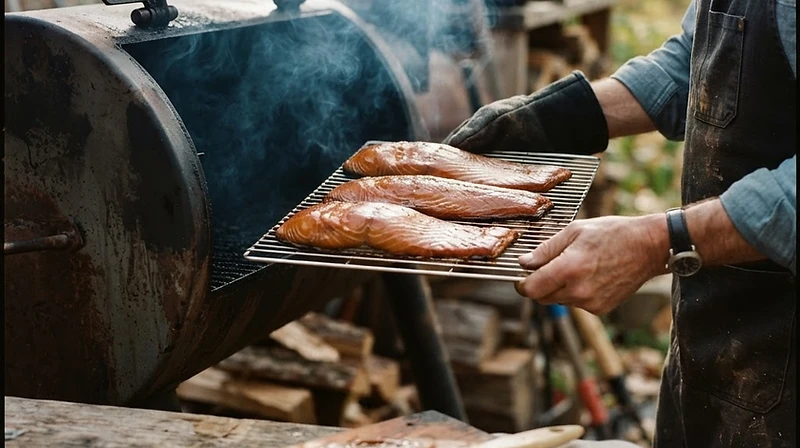
Cook with a Smoker
Master the alchemy of fire and timber: where patience transforms simple cuts into legendary feasts.
But first, a little context and history...
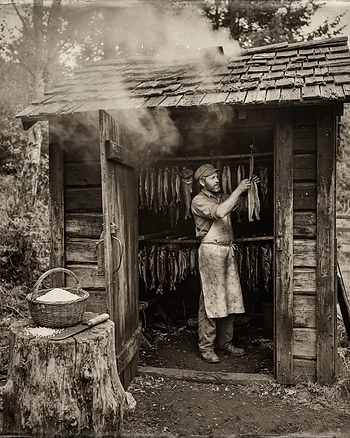
Smoking represents the oldest culinary technology in human history. Long before modern convection or induction, our ancestors harnessed the dual power of dehydration and chemical preservation found in wood smoke. Archaeological evidence from the Upper Paleolithic period suggests that nomadic tribes discovered that hanging meat above a central hearth not only dried the protein but infused it with compounds that inhibited bacterial growth. This wasn't merely a preference; it was a strategy for survival against the encroaching winter. As civilizations transitioned to settled agriculture, the dedicated smokehouse became a staple of the medieval homestead. These stone and timber structures allowed for the controlled curing of hams, sausages, and fish, ensuring a stable food supply throughout the year.
The mechanics of this practice rely on the scientific interaction between heat, salt, and smoke. When wood burns, it releases phenols and aldehydes—naturally occurring preservatives that coat the surface of the food. Simultaneously, the salt cure draws moisture from the internal fibers, creating an environment inhospitable to pathogens. While medieval peasants focused on endurance, later North Atlantic and Scandinavian cultures refined the process for delicacy, particularly regarding oily fish like salmon and herring. These traditions evolved into distinct regional methodologies, from the peat-fueled smokehouses of Scotland to the hickory-rich pits of the American South.
For the modern home cook, the hobby bifurcates into two primary disciplines: hot smoking and cold smoking. Hot smoking operates between 180°F and 250°F, acting as both a cooking method and a flavoring process. This is the realm of the classic American barbecue, where collagen-rich cuts like brisket and pork shoulder undergo a slow breakdown into succulent tenderness over several hours. Conversely, cold smoking occurs at significantly lower temperatures, usually between 70°F and 90°F. This technique serves to infuse raw ingredients—such as artisanal cheeses, sea salt, or delicate lox—with deep, aromatic complexity without altering their structural integrity. Mastering these two distinct approaches opens a vast spectrum of culinary possibility.
Getting started requires only a modest investment in equipment and a willingness to embrace imperfection. Modern vertical water smokers, offset barrels, and high-tech pellet grills cater to every level of experience, taking much of the guesswork out of temperature regulation. Essential tools include a reliable digital thermometer, a variety of seasoned hardwoods like oak, cherry, or pecan, and perhaps a small notebook to log your experiments. The learning curve is gentle, yet the potential for mastery is endless, as every species of wood imparts a unique profile to the final product.
Why does this resonate so deeply with the Gen X empty nester? Perhaps it is the inherent deceleration required by the task. In a world of instantaneous delivery and rapid digital engagement, smoking demands a deliberate departure from the clock. It requires one to spend an afternoon outside, monitoring a thin ribbon of blue smoke, tending to the fire, and respecting the pace of the protein. It is a hobby that rewards experience and nuance, offering a productive space for reflection and quiet focus.
As you progress, you will discover the importance of the pellicle—the tacky, protein-rich surface layer that forms on fish and meat after brining. This layer is the magnet for smoke, and learning to develop it marks the transition from novice to journeyman. Whether you are perfecting a dry-rubbed rack of ribs or experimenting with cold-smoked peppercorns, you are participating in a lineage that spans millennia. This is not just cooking; it is an intimate connection to the elemental forces that have nourished human civilization since the dawn of time.
“Smoking isn't just a method; it is a conversation between time, hardwood, and meat that rewards the patient observer.”
What to gather
A graded list of gear — from the first honest kit to the tools of a life in the craft. The Novice kit is free; the deeper tiers open with membership.
Novice
The first kit — enough to begin honestly.
From novice to proficient
A thirty-day passage. Each node is a day. The terracotta fill marks the ground you have already covered.
Understand the two crafts: hot smoking (cooks and smokes) and cold smoking (smokes without cooking). Tour the smoker, the wood, the thermometer. Today is orientation; the smoke begins tomorrow.
YouTubeThe Smoker and the Two Crafts
Keeping It DutchReflect on the difference between hot and cold smoking; which style are you most excited to master first?
Saved locally to your device


How the cohort practices today
The pulse is quiet — for now.
Be the first to document your Cook with a Smoker journey with #EmptyNexxter.