
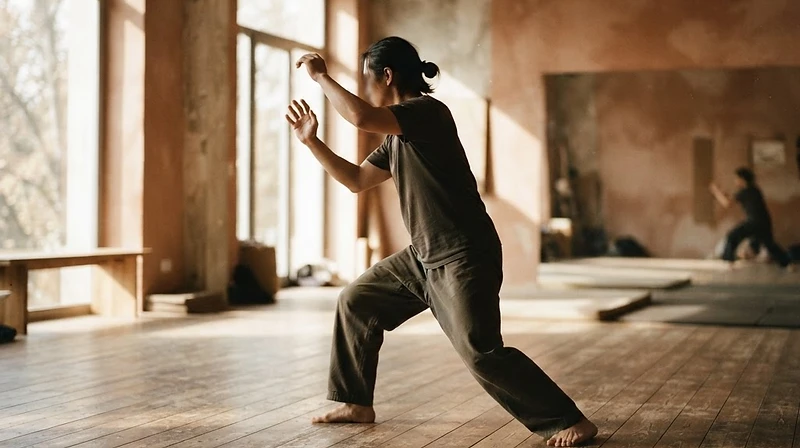
Basic Self-Defense
Not to fight, but to never be helpless — the ancient art of walking through the world unafraid.
But first, a little context and history...
The instinct to protect oneself is as old as consciousness, but the codification of self-defense as a teachable discipline traces back to the ancient world. The earliest documented martial traditions emerged in Mesopotamia and Egypt around 3000 BCE, where wall reliefs depict soldiers practicing structured combat techniques. In China, the Yellow Emperor's treatise on martial arts is traditionally dated to 2697 BCE, though the text itself is likely a later compilation.
What we recognize as 'self-defense' — distinct from warfare or sport — is a more modern concept. The term entered common English in the mid-17th century, but the practice of teaching ordinary citizens to protect themselves gained urgency with urbanization. In 19th-century Japan, Jigoro Kano founded Judo in 1882 as a distillation of jujutsu techniques safe enough for civilian practice. Kano's pedagogical model — stripping lethal battlefield techniques down to their teachable, repeatable core — became the template for modern self-defense instruction worldwide.
In the West, the women's self-defense movement emerged in the early 20th century as a response to street harassment and domestic violence. By the 1970s, feminist self-defense courses reframed personal safety as a matter of empowerment rather than restriction, teaching that awareness, voice, and boundary-setting were as important as physical technique. The concept of the 'force continuum' — matching one's response to the level of threat — became standard curriculum.
Today, basic self-defense instruction converges on a few universal principles shared across traditions: situational awareness as the first line of defense, verbal de-escalation as the preferred response, physical technique as a last resort, and immediate escape as the ultimate goal. The empty nest years, when confidence in one's physical capability may waver, are a natural time to rebuild the foundation — not to become a fighter, but to walk through the world with the quiet assurance that you are not helpless.
“The best fight is the one you never have — and the second best is the one you leave.”
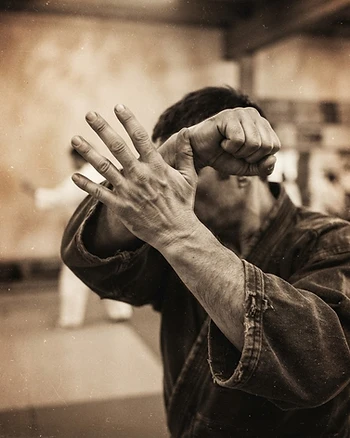
What to gather
A graded list of gear — from the first honest kit to the tools of a life in the craft. The Novice kit is free; the deeper tiers open with membership.
Novice
The first kit — enough to begin honestly.
From novice to proficient
A thirty-day passage. Each node is a day. The terracotta fill marks the ground you have already covered.
Understanding that self-defense is primarily about awareness and avoiding conflict rather than fighting.
YouTubeThe Self-Defense Mindset
Free Range AmericanHow does changing your perspective from 'fighting' to 'safety' change your daily behavior?
Saved locally to your device


How the cohort practices today
The pulse is quiet — for now.
Be the first to document your Basic Self-Defense journey with #EmptyNexxter.