
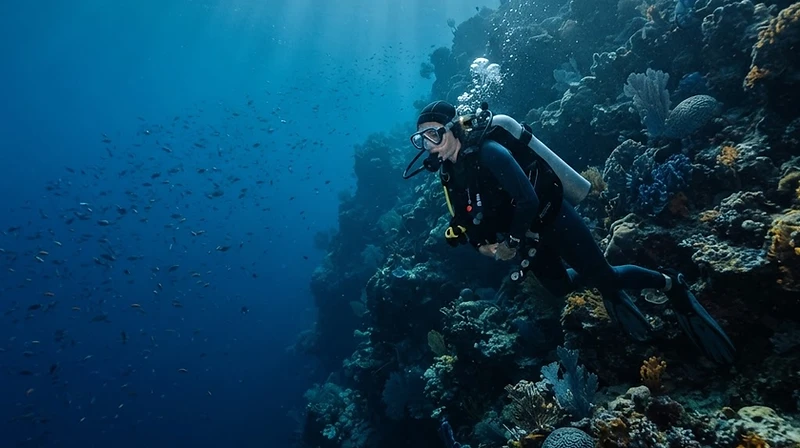
Scuba Diving
Beyond the surface: reclaiming your sense of wonder in the silent, weightless realm of the deep.
But first, a little context and history...
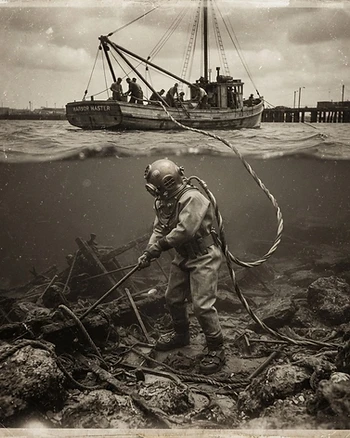
Scuba diving represents the ultimate escape for the modern explorer, offering an immersive experience that defies gravity and noise. At its core, the activity relies on the Self-Contained Underwater Breathing Apparatus, allowing a diver to move freely through the water column without a surface air supply. For the empty nester, this hobby offers a unique blend of physical mindfulness and environmental discovery, shifting focus from the demands of a career to the serene, alien beauty of the ocean floor. It is a pursuit that rewards patience, calm, and a genuine curiosity about the hidden architecture of the natural world. The journey into the deep begins with mastering buoyancy—a delicate balance between your lung capacity and the weights you carry—transforming your body into a vessel of effortless motion. While the equipment appears technical, modern certification programs provide a systematic, safety-first approach that ensures mastery over time. You will learn to rely on your regulator to deliver air at ambient pressure, a feat of engineering that makes long-duration exploration possible. Beyond the mechanics, scuba is a sensory reset. Below the surface, the color spectrum shifts as light filters through the water, and the silence allows for a profound connection to the surrounding reef or wreck. This activity is uniquely suited for the mid-life transition, as it replaces the frantic pace of the professional world with the measured, meditative cadence of life under the waves. The history of this discipline is rooted in the practical necessity of the Victorian era. In 1837, German-born engineer Augustus Siebe perfected the closed diving dress, a copper helmet mated to a vulcanized rubber suit. While initially designed for salvage operations and harbor construction, this heavy-duty apparatus laid the foundational principles of pressure management and air delivery. Divers of the 19th century were tethered to surface pumps, constrained by thick hoses and heavy boots, yet they proved that human beings could survive and perform work in high-pressure environments. This era established the essential safety protocols that govern modern recreational diving. The pivotal shift from industrial tool to recreational pursuit arrived in 1943. During the occupation of France, Jacques-Yves Cousteau and engineer Émile Gagnan pioneered the Aqua-Lung, an open-circuit, demand-regulated system. By eliminating the heavy umbilical cord to the surface, they granted the diver the freedom to roam horizontally. This invention effectively democratized the ocean, moving the activity out of the shipyard and into the realm of adventure. During the 1950s and 60s, the sport exploded in popularity, fueled by Cousteau’s documentaries and the development of reliable masks, fins, and depth gauges. The subsequent formation of organizations like PADI in 1966 standardized the training process, making the sport accessible to anyone with basic swimming skills and a desire to see what lies beneath the surface. Today, the craft is supported by digital dive computers and high-performance buoyancy compensators that make the experience safer and more intuitive than ever before. Modern gear allows for precise depth control, ensuring that even novice divers can observe coral reefs and marine life with minimal impact on the ecosystem. As an empty nester, you are well-positioned to appreciate the nuances of the craft. Scuba diving requires the same intellectual engagement as a professional career but offers a restorative, visceral return on that investment. Whether exploring a sunken freighter in the Caribbean or observing the kelp forests of the Pacific, you are participating in a global tradition of quiet discovery. You enter the water to see the world, but you often emerge having gained a deeper, more peaceful perspective on yourself.
“Underwater, the noise of the world dissolves. You trade the complexity of dry land for the singular, rhythmic truth of your own breath.”
What to gather
A graded list of gear — from the first honest kit to the tools of a life in the craft. The Novice kit is free; the deeper tiers open with membership.
Advanced
The serious tools of a committed hand.
Coming soon
Expert
The equipment of a life in the craft.
Coming soon
From novice to proficient
A thirty-day passage. Each node is a day. The terracotta fill marks the ground you have already covered.
Understand the craft: the tank, the regulator, the buoyancy, the depth. Tour the gear and the sea. Today is orientation; the dive begins tomorrow.
YouTubeThe Craft and the Deep
Scuba Diving TipsReflect on the complexity of the gear setup. What part of the assembly process felt most intimidating, and why is redundancy important in scuba equipment?
Saved locally to your device


How the cohort practices today
The pulse is quiet — for now.
Be the first to document your Scuba Diving journey with #EmptyNexxter.