
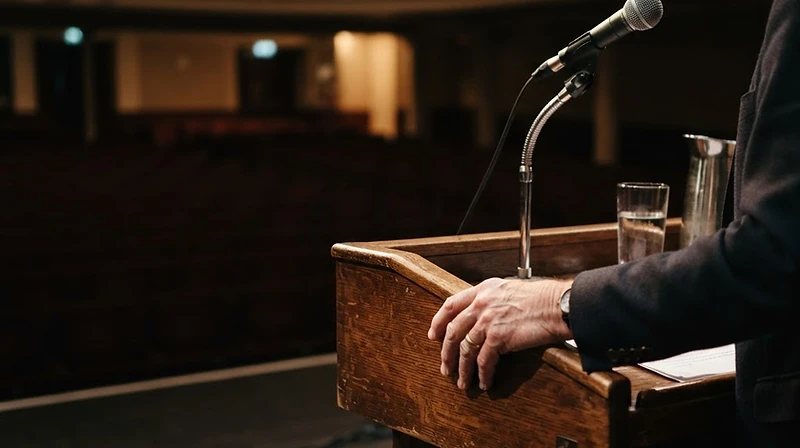
Public Speaking
The architecture of conviction: refining the art of the spoken word in the golden hour of life.
But first, a little context and history...
Public speaking stands as one of humanity’s oldest intellectual disciplines, originating in the democratic heart of Athens during the 5th century BCE. Within the agora, the ability to articulate ideas clearly became a prerequisite for citizenship and leadership. Figures such as Demosthenes mastered the craft, overcoming personal vocal impediments through rigorous practice and disciplined breath control. For the Greeks, rhetoric was not merely about persuasion; it was a foundational pillar of logic and justice, transforming the simple act of speaking into a structured, analytical performance. The Romans later adopted this mantle, with Cicero elevating the oratorical style to unparalleled heights in the Roman Forum, establishing a standard for argumentation that remains the blueprint for modern discourse.
As the centuries progressed, the practice moved from the political theater into the academic and social spheres. The medieval trivium—the educational framework of grammar, logic, and rhetoric—ensured that the art of effective communication remained central to Western thought. By the 19th century, the Lyceum movement in the United States and the Chautauqua circuits transformed public speaking into a popular cultural pastime. Ordinary citizens gathered in town halls to hear lectures on science, politics, and literature, proving that a well-crafted speech had the power to educate and unify disparate communities. This era cemented the speaker as a vital intellectual guide within the public square.
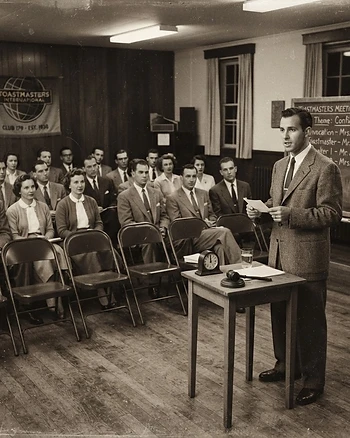
In 1924, Ralph C. Smedley formalized the practice by founding Toastmasters International, providing a structured, supportive environment for individuals to refine their communication skills. This organization democratized oratory, moving it away from the exclusive domain of elite politicians and into the local meeting hall. Today, the discipline has evolved further through the global reach of digital platforms like TED, where brevity, narrative arc, and emotional resonance have become the hallmarks of a compelling presentation. The medium has changed, yet the core requirement remains the same: the human desire to be heard and understood.
For the Gen X empty nester, public speaking offers a unique convergence of legacy and self-discovery. With the frantic pace of raising a family settling into a new rhythm, this demographic possesses the life experience and emotional depth that make for a profound speaker. It is a hobby that requires little more than your voice and a genuine desire to connect with others. You do not need expensive equipment; rather, you need a willingness to structure your thoughts, practice your delivery, and engage with your community. Whether you are leading a local committee, teaching a workshop, or simply sharing a story at a community event, you are participating in a tradition that spans over two millennia.
Developing this craft involves identifying your core message and stripping away the excess until only the truth remains. Mastery begins with listening—first to the masters of the past, and then to your own internal monologue as you edit for clarity. You might choose to join a local club, record your practice sessions, or simply volunteer to speak at neighborhood gatherings. Each opportunity to address an audience is a chance to sharpen your mental acuity and gain confidence. This is not about winning an argument or delivering a lecture; it is about the grace of articulation.
Ultimately, public speaking is a second prime pursuit. It rewards those who are patient enough to practice and bold enough to share their perspective. By turning your observations into narratives, you contribute to the collective wisdom of your peers. The empty nest years provide the perfect quietude to focus on the nuances of tone, pacing, and intentionality. In an era often dominated by fragmented digital text, the human voice remains the most potent tool for building bridges. Embrace this craft as a way to define your second act, transforming your history into a dialogue with the future.
“True eloquence is not about the volume of your voice, but the weight of your words and the authenticity of the silence you leave behind.”
What to gather
A graded list of gear — from the first honest kit to the tools of a life in the craft. The Novice kit is free; the deeper tiers open with membership.
Novice
The first kit — enough to begin honestly.
From novice to proficient
A thirty-day passage. Each node is a day. The terracotta fill marks the ground you have already covered.
Understand the craft: the word, the breath, the stage, the calm. Tour the message and the room. Today is orientation; the speech begins tomorrow.
YouTubeThe Craft and the Voice
The Speaker LabWhat is the primary goal you hope to achieve by the end of this 10-day journey, and what is one fear you are ready to let go of?
Saved locally to your device


How the cohort practices today
The pulse is quiet — for now.
Be the first to document your Public Speaking journey with #EmptyNexxter.