
Private Pilot License
Beyond the threshold of the clouds: Mastering the skies as your ultimate second act.
But first, a little context and history...
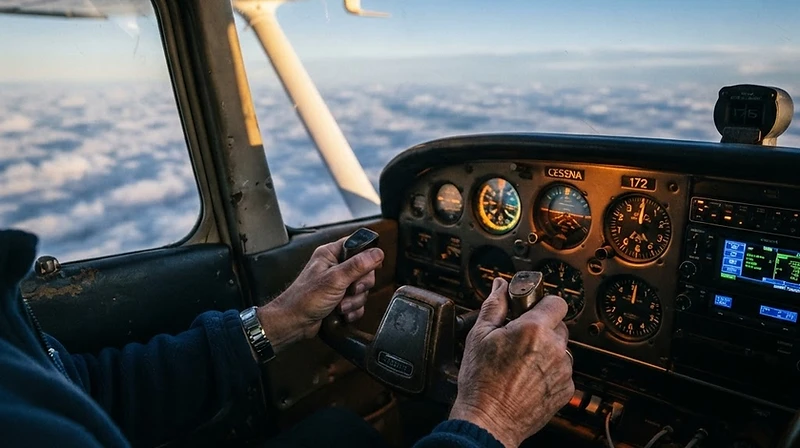
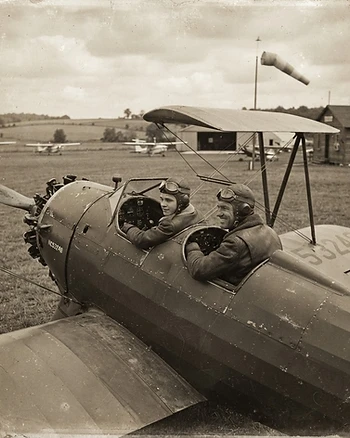
For those entering the season of the empty nest, the sky offers a unique canvas for mastery. Earning a Private Pilot License (PPL) is more than a technical achievement; it is a profound reclamation of independence. With the daily responsibilities of parenting behind you, the cockpit becomes a space where your focus narrows entirely to the instruments, the wind, and the path ahead. This is not merely transportation—it is a study in precision and the singular joy of navigating the three-dimensional world on your own terms. The history of this pursuit is rooted in the legislative landscape of the 1920s. Before the Air Commerce Act of 1926, flight was a chaotic, unregulated frontier defined by barnstormers and high-risk daredevils. The federal government’s intervention brought necessary order to the chaos, establishing the first standardized requirements for airworthiness and pilot certification. This legislation transformed flight from a dangerous spectacle into a disciplined craft, providing the foundation for the structured curriculum you encounter at your local flight school today. As the mid-20th century progressed, programs like the Civilian Pilot Training (CPT) of 1939 scaled this knowledge, bringing aviation into the public consciousness and ensuring that the safety protocols we rely on now became the gold standard for every aviator. The evolution continued through the standardization efforts of 1973, when the FAA introduced FAR Part 61. These regulations refined how we log flight hours, manage cross-country navigation, and maintain aircraft maintenance cycles. For the modern enthusiast, this means the training path is clearly defined. You will start by mastering the fundamentals of aerodynamics and weather theory, moving into the tactile experience of manual flight maneuvers. Whether you are piloting a classic Cessna 172 or a modern light-sport aircraft, the equipment serves as an extension of your own senses. You will rely on the yoke to dictate attitude, the throttle to manage power, and the complex array of avionics—now often replaced by sophisticated 'glass cockpit' digital displays—to chart your trajectory. A significant milestone in the hobby is the 'long cross-country,' a rite of passage where you navigate through multiple airports, managing fuel, radio communications, and shifting winds. This is where the theory meets reality. You aren't just reading about flight planning; you are executing it under real conditions. Many empty nesters find the community aspect of this hobby particularly rewarding. The legendary '$100 hamburger'—a tradition where pilots fly to a nearby airport specifically to dine at a local cafe—serves as a perfect metaphor for the lifestyle. It is about the journey, the camaraderie found in quiet hangers, and the satisfaction of returning home with a fresh entry in your logbook. Choosing to pursue flight at this stage of life offers a rare commodity: a complete mental reset. When you are aloft, the noise of the digital world vanishes, replaced by the rhythmic hum of the engine and the imperative need for concentration. It is the antithesis of the frantic pace of the professional years, replacing endless meetings with a singular, beautiful objective: a perfect landing. You are no longer managing others; you are managing your own vector, altitude, and future. For the Gen X professional, this is the ultimate reclamation of the self.
“To fly is to demand total presence; the horizon waits for no one, and for the first time, neither do you.”
What to gather
A graded list of gear — from the first honest kit to the tools of a life in the craft. The Novice kit is free; the deeper tiers open with membership.
Novice
The first kit — enough to begin honestly.
From novice to proficient
A thirty-day passage. Each node is a day. The terracotta fill marks the ground you have already covered.
Understand the craft: the yoke, the horizon, the logbook, the radio. Tour the plane and the airport. Today is orientation; the flight begins tomorrow.
YouTubeThe Craft and the Sky
Sporty's Pilot ShopReflect on your first impression of the cockpit layout. What instrument or control seems the most intimidating, and why?
Saved locally to your device


How the cohort practices today
The pulse is quiet — for now.
Be the first to document your Private Pilot License journey with #EmptyNexxter.