
Pilates
Reclaim your posture and inner resolve through the precise, intentional movements of classical Contrology.
But first, a little context and history...
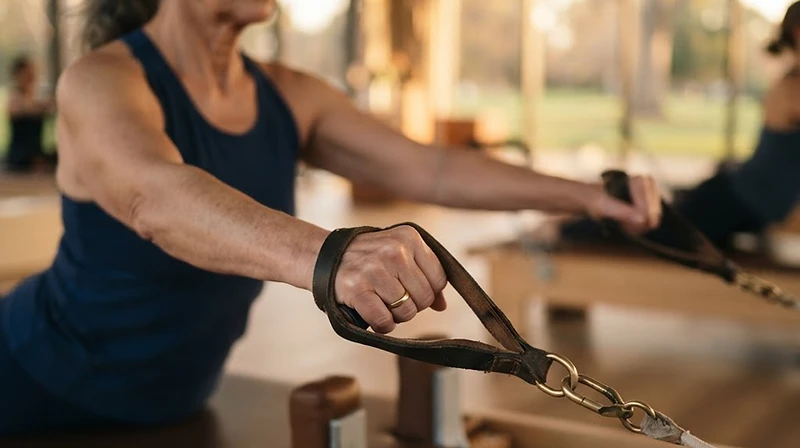
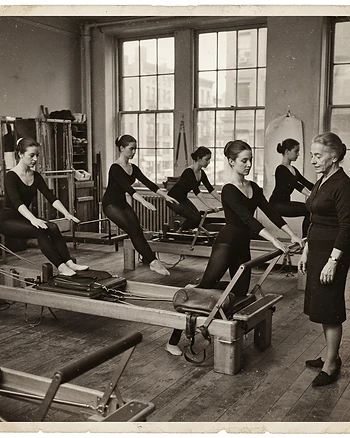
In the quiet hum of an empty house, the body often bears the marks of decades spent hunched over desks or tending to the endless demands of parenting. Pilates offers a profound corrective, moving beyond the repetitive strain of modern life into a disciplined engagement with one’s own frame. Known originally as Contrology, the system is less a workout and more a manual for operating the human machine. It focuses on the powerhouse—the deep abdominal, pelvic, and spinal muscles—to create a structural integrity that supports every movement throughout the day. By marrying rhythmic breath with precise, low-impact motion, the practitioner cultivates a unique kind of physical literacy that emphasizes quality over frantic repetition. The roots of this craft reach back to 1914, when a German physical trainer named Joseph Pilates found himself interned on the Isle of Man during the First World War. Working with fellow detainees who were bedridden or suffering from illness, he rigged bed springs to frames to provide resistance training for those unable to bear their own weight. This ingenuity birthed the foundational concepts of the Reformer, the Cadillac, and the Wunda Chair—apparatuses that still define the contemporary studio experience. After the war, Pilates returned to Germany, only to emigrate to New York City in 1926. Establishing his studio at 939 Eighth Avenue, he spent the next four decades refining a method that would bridge the gap between medicine and movement. For many years, this method remained an elite secret, largely guarded by the dancers of the New York City Ballet. Figures like George Balanchine and Martha Graham sent their injured performers to Pilates to recover and realign their bodies. These dancers recognized that the deep core work and spinal articulation offered by the method provided a level of strength that traditional weightlifting could not replicate. It was this rigorous pedigree that eventually propelled the movement into the mainstream. As the 20th century turned toward the 21st, the practice shed its reputation as a niche therapy and found a permanent home in wellness centers across the globe. Today, the equipment is both familiar and revolutionary. A Reformer—a bed-like frame equipped with a sliding carriage and variable spring tensions—remains the hallmark of the craft. It provides a tactile feedback loop that teaches the body to find alignment in real-time. For those beginning at home, the 'Mat Pilates' tradition is equally potent, requiring nothing more than a non-slip surface and the resolve to move with deliberate, focused intensity. The simplicity of the gear belies the complexity of the internal work, as the goal is to master the small, stabilizing muscles often overlooked by conventional exercise. For the Gen X empty nester, this practice arrives at a critical juncture. After years of placing external needs at the forefront, there is finally space to redirect that energy inward. Pilates respects the aging spine while challenging the body to remain supple and resilient. It offers a meditative quality, demanding total concentration that effectively silences the static of a busy mind. You are not merely burning calories; you are mapping your anatomy and reinforcing your posture against the inevitable pull of gravity. It is a slow, steady investment in physical autonomy. As you transition into this new chapter, view your daily sessions as a form of maintenance for a lifetime of activity. The beauty of the method lies in its scalability; as you progress, the exercises deepen, revealing new layers of control. You might begin by learning to anchor your pelvis or coordinate your inhalation with the lengthening of a limb. Over months and years, these small victories accumulate, resulting in an effortless carriage and a newfound capacity for movement. It is a practice of subtraction, removing unnecessary tension to reveal the strength that has been dormant beneath the surface. Ultimately, Pilates invites you to inhabit your body with renewed intention. It stands as a testament to the idea that one is never too old to refine one’s form or improve the way they navigate the world. By dedicating a few hours each week to the mat or the machine, you are building a foundation that makes the coming decades easier to bear. Whether you seek to alleviate lingering back pain or simply wish to move with more grace, this discipline provides the structure you need. It is a quiet, powerful commitment to yourself, grounded in a century of wisdom.
“Physical fitness is the first requisite of happiness. It is the attainment and maintenance of a uniformly developed body.”
What to gather
A graded list of gear — from the first honest kit to the tools of a life in the craft. The Novice kit is free; the deeper tiers open with membership.
Novice
The first kit — enough to begin honestly.
From novice to proficient
A thirty-day passage. Each node is a day. The terracotta fill marks the ground you have already covered.
Understand the craft: the breath, the core, the control, the calm. Tour the mat and the studio. Today is orientation; the move begins tomorrow.
YouTubeThe Craft and the Control
Flow with MiraReflect on how it felt to bring conscious awareness to your posture and alignment for the first time. What part of your body felt most restricted or in need of attention?
Saved locally to your device


How the cohort practices today
The pulse is quiet — for now.
Be the first to document your Pilates journey with #EmptyNexxter.