
Orienteering
Navigate by needle and wit: rediscover the landscape through the art of orienteering.
But first, a little context and history...
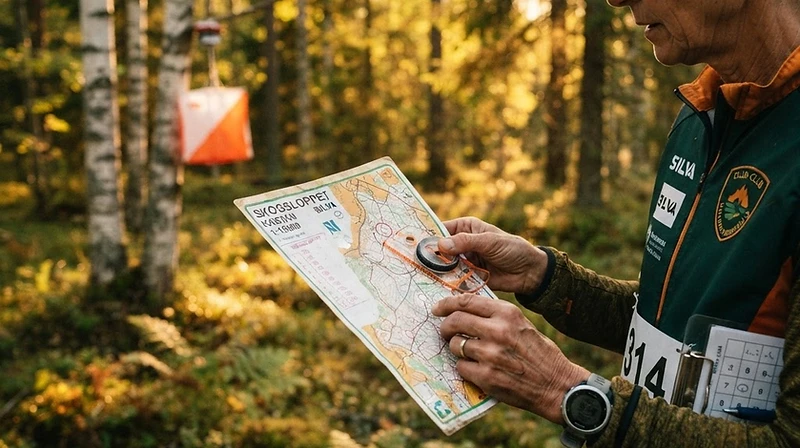
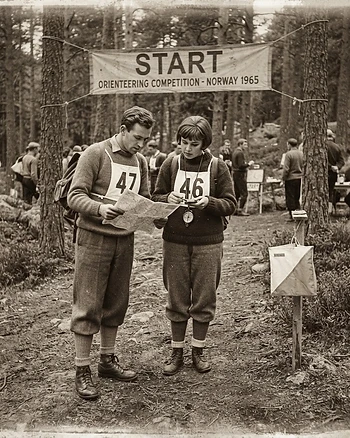
Orienteering invites you to engage with the wilderness not as a bystander, but as a navigator. At its core, the activity requires you to traverse unfamiliar terrain, locating a series of checkpoints—known as controls—using nothing more than a topographical map and a magnetic compass. It is a meditative yet physically stimulating pursuit, rewarding precision over raw speed. For those of us entering our second prime, it offers a perfect balance: the intellectual rigor of cartographic interpretation paired with the restorative quiet of the great outdoors. The modern discipline traces its roots to late 19th-century Scandinavia. In 1897, a public competition held near Oslo, Norway, introduced civilians to the concept of navigating across unknown country, setting a precedent that would soon move from a local curiosity to a national pastime. The sport gained significant structure after World War I, when the Swedish military refined the practice to test the navigational skills of its officers. By 1918, a Swedish major named Ernst Killander formalized these exercises, moving them from military drill fields into the recreational sphere. This transition transformed a rigorous endurance task into a beloved social endeavor, fostering a culture of outdoor independence that rapidly expanded throughout Europe. As the activity gained popularity, the need for international standardization grew, culminating in the 1961 founding of the International Orienteering Federation (IOF) in Copenhagen. This milestone professionalized the sport, establishing universal symbols for maps and technical regulations for events. Today, the craft has embraced the digital age through the use of electronic punching systems—small devices that confirm your arrival at a control point with a satisfying beep. While GPS technology is common in other outdoor pursuits, traditional orienteering maintains its integrity by relying on the manual reading of contour lines and physical landmarks. You do not need expensive gear to begin. A basic baseplate compass, a set of sturdy trail shoes, and a curious spirit are all that is required. Maps are usually provided by local clubs and are masterpieces of detail, depicting everything from singular boulders to marshy dips in the terrain. For Gen X empty nesters, orienteering provides a unique tonic to the hyper-connected nature of our daily lives. In the forest, the only notifications you receive are the rustle of leaves or the shift of light through the canopy. The sport demands total immersion; when you are focused on identifying a subtle ridge or a re-entrant, the anxieties of the office and the homefront evaporate. It is a pursuit that matures with you, allowing for varied levels of exertion. Whether you choose to participate in a high-intensity race or a contemplative walk, the challenge of finding your way through a landscape remains deeply satisfying. Many clubs offer clinics for beginners, providing a welcoming community that values technical growth and regional exploration. Engaging with the landscape in this deliberate manner connects us to the same ancient instinct that allowed explorers to chart the unknown. By embracing this heritage hobby, you reclaim your relationship with the environment, turning a simple hike into an intricate, rewarding puzzle.
“Orienteering is the rare sport where the mind and the map travel faster than the feet. It is a dialogue between the terrain and your own intuition.”
What to gather
A graded list of gear — from the first honest kit to the tools of a life in the craft. The Novice kit is free; the deeper tiers open with membership.
Novice
The first kit — enough to begin honestly.
From novice to proficient
A thirty-day passage. Each node is a day. The terracotta fill marks the ground you have already covered.
Understand the craft: the map, the compass, the route, the control. Tour the course and the map. Today is orientation; the navigation begins tomorrow.
YouTubeThe Craft and the Course
South London Orienteers / On The Red LineReflect on the difference between a standard hiking map and an orienteering map. What specific features stood out to you as essential for navigating a course?
Saved locally to your device


How the cohort practices today
The pulse is quiet — for now.
Be the first to document your Orienteering journey with #EmptyNexxter.