
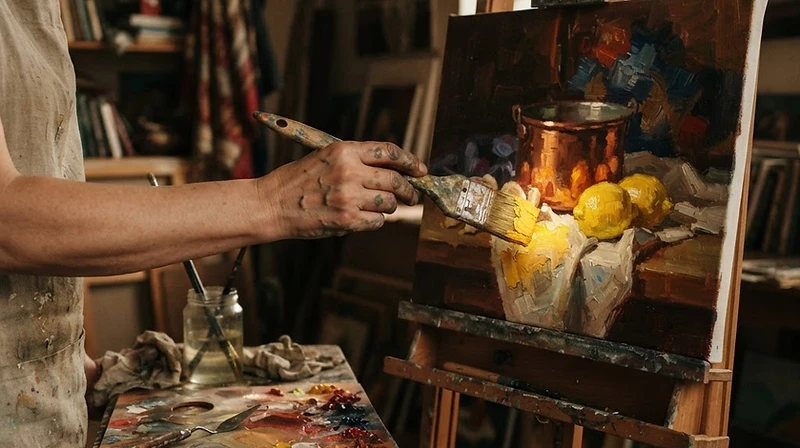
Oil Painting
Capture the fleeting nuances of light and shadow through the enduring, luminous tradition of oil painting.
But first, a little context and history...
Oil painting offers a profound departure from the fast-paced digital distractions of modern life. Unlike acrylics or watercolors that dry in minutes, oil paints remain workable for days. This unique characteristic allows you to blend colors seamlessly, build up rich textures, and reconsider your compositions long after the initial stroke is laid. For the empty nester, this medium provides a meditative, tactile engagement with color and form that rewards patience and rewards curiosity in equal measure. The historical journey of oil paint began in the 15th century within the workshops of the Low Countries. Painters such as Jan van Eyck revolutionized the craft by replacing the brittle, egg-based tempera of the Middle Ages with ground pigments suspended in linseed or walnut oil. This transition allowed for unprecedented precision, enabling artists to capture the subtle luster of silk, the intricate texture of fur, and the complex atmospheric effects of light. These early Flemish panels served as the foundation for an artistic evolution that would eventually reshape the aesthetic landscape of Western art. By the 16th century, the technique migrated south to Venice, where masters like Titian and Tintoretto introduced canvas as the primary support. The transition from rigid wood panels to flexible, large-scale fabric allowed artists to work at a monumental scale. Venetian painters embraced the unique qualities of the oil medium to develop techniques such as impasto—the thick, sculptural application of paint—and the delicate, translucent glazing that creates the illusion of internal light. These methods transformed painting from a mere record of reality into a visceral, emotional experience that prioritized the vitality of the brushstroke. The practice continued to flourish through the Dutch Golden Age, where artists like Rembrandt and Vermeer utilized the medium to explore the intimate interplay of domestic life and chiaroscuro. Rembrandt’s dramatic use of heavy, layered paint contrasted sharply with Vermeer’s calculated, luminous surfaces, demonstrating the immense versatility of oil as a tool for storytelling. As the medium moved through centuries of refinement, it became the standard for portraiture, landscape, and historical narration across Europe. Today, practitioners require only a modest set of supplies to begin: a selection of professional-grade pigments, a few hog-hair or synthetic brushes, a palette, and a primed canvas. The modern studio setup is intentionally simple, stripping away the complexity of the past to focus on the essential dialogue between the artist and the surface. You do not need to master every chemical nuance of a paint binder; you only need the willingness to observe the world with newfound focus. Oil painting suits the current chapter of your life because it does not prioritize speed or immediate results. It invites you to linger over a subject, whether you are rendering the quiet geometry of a morning coffee or the complex light of a garden landscape. This craft asks you to slow down, to mix your own colors, and to appreciate the physical resistance of the brush against the weave of the canvas. In an era dominated by rapid consumption, returning to a tradition defined by its slow, deliberate growth is a rare and rewarding luxury.
“Oil paint demands nothing but your presence; it is a patient medium that waits for your hand to find its own rhythm.”
What to gather
A graded list of gear — from the first honest kit to the tools of a life in the craft. The Novice kit is free; the deeper tiers open with membership.
Novice
The first kit — enough to begin honestly.
Expert
The equipment of a life in the craft.
Coming soon
From novice to proficient
A thirty-day passage. Each node is a day. The terracotta fill marks the ground you have already covered.
Understand the medium: the pigment and the oil, the brush and the canvas, the solvent and the medium. Tour the studio, the easel, the palette. Today is orientation; the oil begins tomorrow.
YouTubeThe Medium and the Studio
Lena DanyaReflect on your current workspace setup. What is one change you can make to your studio environment to make it more conducive to painting?
Saved locally to your device


How the cohort practices today
The pulse is quiet — for now.
Be the first to document your Oil Painting journey with #EmptyNexxter.