

Metal Detecting
Unearth the silent narratives of the soil, where every sweep of the coil whispers a story from the deep past.
But first, a little context and history...
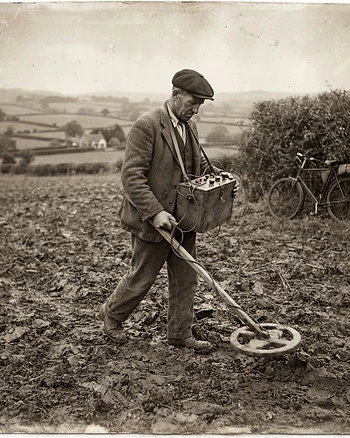
Metal detecting is far more than a casual walk in the park; it is an intimate archeological dialogue with the landscape. At its core, the practice involves sweeping a handheld electromagnetic sensor over the surface of the earth to locate buried metallic objects. When the device detects a change in the local magnetic field—the signature of a coin, a button, or a piece of machinery—the detectorist performs a careful excavation to reveal the find. It is a hobby that balances technical curiosity with physical activity, demanding a patient eye and a steady hand. For the Gen X empty nester, this pursuit offers a rare combination of solitude and purpose, turning an afternoon stroll into a purposeful exploration of regional history. The technological foundations of the hobby trace back to the late 19th century, most famously when Alexander Graham Bell constructed an inductive balance detector in 1881 to locate a bullet lodged within President James A. Garfield. However, the portable, practical metal detector was forged in the crucibles of the Second World War. Combat engineers relied on cumbersome, two-box 'mine detectors' to clear safe paths for infantry. Following the Allied victory, vast quantities of this surplus equipment filtered into the civilian market, providing tinkerers and amateur historians with the means to scan beaches and fields for lost valuables. These heavy, battery-draining machines served as the precursors to the refined, lightweight devices used today. As the 1960s gave way to the 1970s, hobbyists like Charles Garrett and Eric Foster began refining circuitry to differentiate between types of metal, such as iron versus gold. This innovation moved the hobby beyond mere 'relic hunting' into the specialized worlds of 'coin shooting'—searching for modern currency—and 'beach combing'—the pursuit of lost jewelry in the tide line. The 1970s treasure-hunting boom cemented detecting as a legitimate recreational activity, bolstered by the emergence of dedicated magazines and community clubs that standardized responsible recovery methods. Modern equipment has reached a remarkable state of sophistication, featuring digital target identification, multi-frequency transmission, and waterproof capabilities. Today’s detectorists utilize VLF (Very Low Frequency) or PI (Pulse Induction) technologies, allowing them to pinpoint targets with surgical accuracy while ignoring common ground mineralization. Operating these machines requires learning the nuanced 'tones' of the audio output, an skill that turns the hobby into an sensory experience akin to music theory. Practicing this craft today is an ideal transition for those entering the empty nest phase. It encourages low-impact exercise, keeps the mind sharp through historical research, and offers a tangible connection to the past that a digital life often lacks. Whether you are searching for a lost pioneer-era token in a local pasture or a piece of sterling silver at a nearby fairground, you are engaging in a timeless act of preservation. Each dig serves as a reminder that the ground beneath us is layered with stories waiting to be heard. The hobby rewards patience above all else; a successful outing is measured not just in the objects recovered, but in the peace found while tracing the forgotten paths of those who came before.
“The soil keeps secrets, but it is not silent. Each signal is a conversation between the present moment and the history beneath your feet.”
What to gather
A graded list of gear — from the first honest kit to the tools of a life in the craft. The Novice kit is free; the deeper tiers open with membership.
Novice
The first kit — enough to begin honestly.
From novice to proficient
A thirty-day passage. Each node is a day. The terracotta fill marks the ground you have already covered.
Understand the hobby: the detector, the coil, the sweep, the dig, the find. Tour the machine, the shovel, the finds pouch, the headphones. Today is orientation; the search begins tomorrow.
YouTubeThe Hobby and the Detector
Metal Detecting NYCReflect on the gear you have gathered; how does each piece of equipment contribute to your confidence before heading out for your first search?
Saved locally to your device


How the cohort practices today
The pulse is quiet — for now.
Be the first to document your Metal Detecting journey with #EmptyNexxter.