
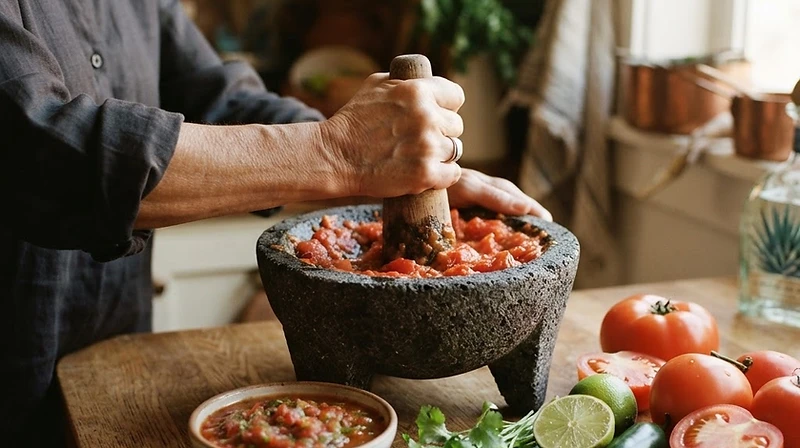
Making Salsa
The alchemy of stone, fire, and vine: mastering the ancient art of the molcajete.
But first, a little context and history...
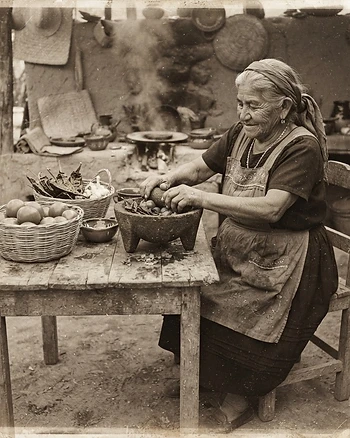
At its heart, salsa is a testament to the transformative power of simple ingredients. It is a fundamental culinary architecture built upon the trinity of tomato, chile, and lime, elevated by the tactile engagement of the cook. While modern convenience often relies on high-speed blades and automated processors, the true spirit of the craft resides in the rhythmic, deliberate motion of a hand-held pestle against a porous stone vessel. For the Gen X empty nester, this practice offers a grounding ritual—a way to reclaim the kitchen as a studio rather than a workspace, turning the preparation of a meal into a meditative study of texture and heat. The roots of this craft are deeply embedded in the Aztec empire. Ancient market vendors in Tenochtitlan utilized the molcajete, a sturdy bowl carved from volcanic basalt, to pulverize fresh produce. These early preparations were not mere condiments; they were essential components of a balanced diet, often incorporating herbs like papalo or epazote that remain largely unknown to the casual consumer today. The volcanic stone provided a unique, slightly abrasive surface that released the essential oils of the chiles and the juice of the tomatoes, creating a sauce with a complex, rustic texture impossible to replicate with modern metal blades. When Spanish chroniclers arrived in the 16th century, they documented these vibrant mixtures with awe, noting their prevalence at every level of society. As trade routes expanded, the ingredients traveled, yet the fundamental method of the molcajete remained the gold standard for those who understood flavor. Over the centuries, the preparation evolved to incorporate European additions like onions and cilantro, yet it never lost its indigenous soul. The 1980s heralded a massive commercial surge in the United States, positioning salsa as a household staple that eventually surpassed ketchup in popularity. While this boom brought variety to the shelves of every grocery store, it also distanced the average home cook from the manual artistry that defined the original form. Rediscovering the craft today allows the seasoned cook to move past the uniform consistency of the jarred product. It invites a return to sourcing the best produce at the seasonal farmstand—tomatoes heavy with summer sun and chiles chosen for their specific heat profile. The equipment required is minimal and enduring. A well-seasoned basalt molcajete is an heirloom piece that lasts for generations, acquiring a deeper patina with every use. By mastering the manual grind, you control the granularity of your creation, moving from a chunky, rustic relish to a smooth, emulsified sauce with subtle adjustments in technique. This hobby suits the empty nester perfectly, as it demands patience, encourages experimentation, and rewards the cook with immediate, tangible results. You are not just feeding a table; you are participating in a lineage of craftsmanship that links the ancient stone-grinders of Mexico to the modern home kitchen. There is an undeniable satisfaction in the quiet labor of the grind, a moment of respite where the only objective is to balance acid, salt, and spice into a perfect, singular expression of the season.
“To use a molcajete is to feel the heartbeat of history; the stone remembers every ingredient you have ever crushed into its grain.”
What to gather
A graded list of gear — from the first honest kit to the tools of a life in the craft. The Novice kit is free; the deeper tiers open with membership.
From novice to proficient
A thirty-day passage. Each node is a day. The terracotta fill marks the ground you have already covered.
Understand the craft: the tomato, the chile, the lime, the salt. Tour the gear and the kitchen. Today is orientation; the salsa begins tomorrow.
YouTubeThe Craft and the Crush
Rick BaylessReflect on the essential ingredients you have gathered today. How does the quality of your produce influence the final flavor profile of a simple salsa?
Saved locally to your device


How the cohort practices today
The pulse is quiet — for now.
Be the first to document your Making Salsa journey with #EmptyNexxter.