
Making Jelly
Capturing the essence of the orchard in a glass, one set at a time.
But first, a little context and history...
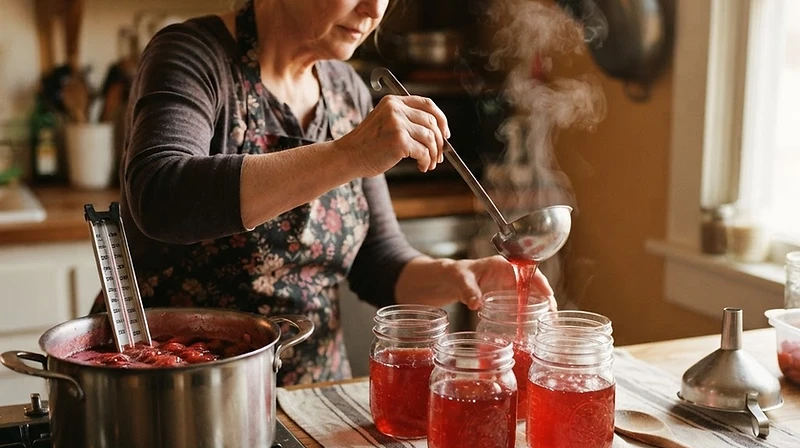
Jelly making sits at the intersection of chemistry and nostalgia, offering Gen X empty nesters a quiet, tactile retreat from the digital noise of modern life. While early civilizations relied on the long, laborious reduction of fruit and honey to achieve a precarious set, the craft underwent a revolution in 1917 with the introduction of Sure-Jell, the first powdered fruit pectin. This commercial breakthrough eliminated the guesswork of natural pectin levels, allowing home cooks to produce clear, consistent, and stable jellies with newfound confidence. By providing a reliable gelling agent, the company fundamentally altered the domestic culinary landscape, turning an arduous preservation method into an accessible, rewarding weekend pursuit. The subsequent rise of the 1920s jelly glass—designed to double as a functional drinking tumbler—cemented the practice as a staple of the American kitchen. During the lean years of the 1940s, jelly making became a patriotic act of conservation, as families turned sugar-rationed fruit harvests into nutrient-dense staples. Today, this hobby serves as a meditative bridge between our agrarian past and the modern artisan kitchen. Mastering the process requires only a few essential tools: a heavy-bottomed pot to ensure even heat distribution, a reliable candy thermometer for accuracy, glass jars for storage, and the patience to watch the mixture undergo its transformation. For those accustomed to the frantic pace of raising a family, the rhythmic boil and careful skimming of a jelly batch provide a rare opportunity for focused, sensory engagement. The precise timing of the ‘sheet test’—where the cooling liquid clings to a cold metal spoon—offers a tangible victory that is both delicious and enduring. Unlike more demanding hobbies, jelly making fits comfortably into the rhythm of a quieter house, where seasonal harvests from local farmers' markets dictate the work. Each jar represents a snapshot of the harvest, capturing the peak of summer strawberries or the crisp acidity of autumn apples long after the season ends. This practice honors the resourcefulness of our ancestors while allowing us to reclaim the slow, methodical pace of artisanal production. By perfecting this delicate art, the empty nester creates a pantry filled with handcrafted gifts, bridging the distance to grown children and friends with a simple, sweet reminder of home. Embracing the craft today is not merely about preservation; it is a declaration of presence, a commitment to savoring the fruits of one's own labor in the quiet, reflective chapters of the second prime.
“Pectin acts as the silent architect of the preserve, transforming fleeting fruit juice into a firm, glistening jewel of the pantry.”
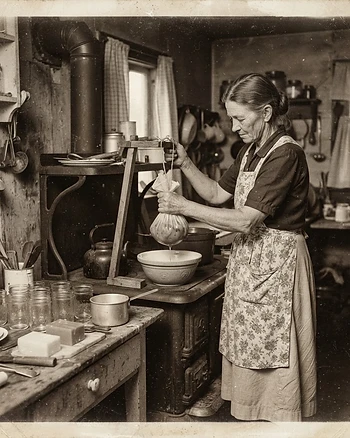
What to gather
A graded list of gear — from the first honest kit to the tools of a life in the craft. The Novice kit is free; the deeper tiers open with membership.
Novice
The first kit — enough to begin honestly.
Advanced
The serious tools of a committed hand.
Coming soon
Expert
The equipment of a life in the craft.
Coming soon
From novice to proficient
A thirty-day passage. Each node is a day. The terracotta fill marks the ground you have already covered.
Understand the craft: the fruit, the pectin, the set, the jar. Tour the gear and the kitchen. Today is orientation; the jelly begins tomorrow.
YouTubeThe Craft and the Set
KUTV 2 News Salt Lake CityReflect on the essential tools you have in your kitchen. How does understanding the role of pectin and sugar change your perspective on the jelly-making process?
Saved locally to your device


How the cohort practices today
The pulse is quiet — for now.
Be the first to document your Making Jelly journey with #EmptyNexxter.