

Magic Tricks
Master the art of the impossible, where precision meets performance in a dance of shadow and light.
But first, a little context and history...
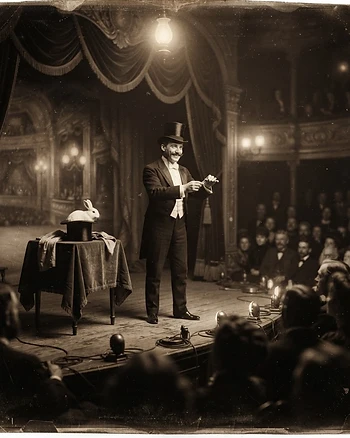
The art of magic is far more than mere deception; it is a sophisticated study of human psychology, misdirection, and manual dexterity. While often categorized as simple entertainment, magic serves as a profound intellectual discipline. It requires the practitioner to bridge the gap between rigorous mechanics and artistic presentation, creating a narrative that lingers long after the secret is revealed. For the empty nester, this hobby offers a unique intellectual sanctuary, blending the physical challenge of sleight-of-hand with the creative satisfaction of stagecraft. The history of performance magic begins in the Egyptian court around 2700 BCE. The Westcar Papyrus recounts the deeds of Dedi, a magician who reportedly amazed Pharaoh Khufu with the decapitation and restoration of animals. These early performances established the core components of the craft: the cup and ball routine, the vanish, and the miraculous restoration. These ancient techniques laid the groundwork for all subsequent practitioners, moving from sacred temples into the bustling public marketplaces of the medieval period. By the 16th century, the craft faced significant shifts in perception. Reginald Scot, in his seminal 1584 text 'The Discoverie of Witchcraft,' provided the first written records of how these illusions were achieved. His intent was to demystify supposed supernatural events, showing that what people feared as dark sorcery was actually the skillful application of human craft. This publication acted as a foundational manual, preserving techniques that had previously been guarded as trade secrets for generations. As the 19th century dawned, the practice migrated from the village fair to the elegant urban salon. Jean-Eugène Robert-Houdin, a French clockmaker turned magician, revolutionized the profession in 1845 by bringing magic into the theater. He replaced the archaic, occult-themed aesthetics with sophisticated, modern evening dress and clever mechanical contraptions. His performances featured iconic effects like the 'second sight' and the orange tree illusion, proving that magic belonged in the company of fine arts rather than the shadows of street theater. This era established the standard for the modern performer, emphasizing personality and elegance. Throughout the early 20th century, figures such as Harry Houdini brought magic into the realm of global spectacle. Houdini's focus on escapes and physical endurance expanded the audience's perception of what a magician could achieve, shifting the craft toward grand, high-stakes narrative. Today, the discipline has split into specialized branches, ranging from close-up card magic performed at intimate dinner tables to grand stage illusions that defy physics. For an empty nester, this hobby is exceptionally rewarding. It requires no heavy equipment—often just a deck of cards, a few coins, or everyday household items. Beyond the performance, the practice itself demands quiet, focused repetition, providing a meditative state that fosters patience and neurological health. As you refine a classic 'Pass' or master the geometry of a coin vanish, you engage your brain in a complex spatial puzzle that remains fresh regardless of your years of study. Entering the world of magic now allows you to reclaim your time, transforming a quiet living room into a private stage where you are the master of reality itself.
“Magic is not about deceiving the audience, but rather inviting them to share in a moment of pure, inexplicable wonder.”

What to gather
A graded list of gear — from the first honest kit to the tools of a life in the craft. The Novice kit is free; the deeper tiers open with membership.
Novice
The first kit — enough to begin honestly.
From novice to proficient
A thirty-day passage. Each node is a day. The terracotta fill marks the ground you have already covered.
Understand the craft: the sleight, the misdirection, the reveal, the effect. Tour the close-up mat, the deck, the coin. Today is orientation; the magic begins tomorrow.
YouTubeThe Craft and the Mat
A Million Card TricksReflect on how the physical setup of your practice space affects your focus. How does understanding the 'why' behind basic handling change your perspective on the craft?
Saved locally to your device


How the cohort practices today
The pulse is quiet — for now.
Be the first to document your Magic Tricks journey with #EmptyNexxter.