
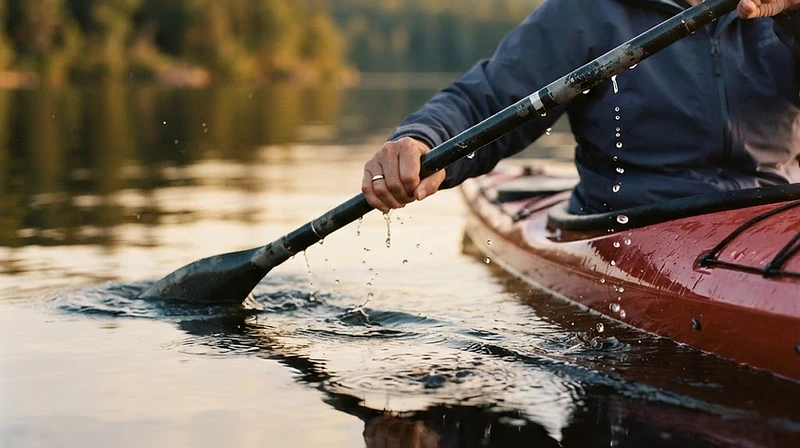
Kayaking
Find your rhythm in the silence between strokes—an ancient pulse for your second prime.
But first, a little context and history...
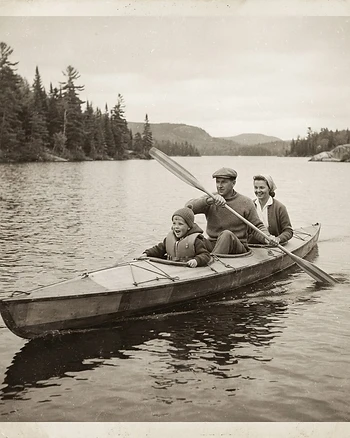
Kayaking began not as a leisure activity, but as a masterpiece of Arctic engineering. Indigenous peoples of the North—specifically the Inuit, Yup'ik, and Aleut—constructed vessels from driftwood or whale bone frames, covered tightly with seal or caribou skins. These early kayaks, or qajaq, were remarkably swift and buoyant, allowing hunters to traverse turbulent coastal waters in pursuit of sustenance. The design was deeply personal; each frame was measured specifically to the paddler's body, ensuring a seamless interface between the human form and the vessel. This fundamental connection between person and boat remains the heart of the experience today. In the early 20th century, Johannes Klepper refined these concepts in Germany, introducing foldable canvas-and-rubber kayaks that brought the craft to the European mainstream. These portable boats sparked a revolution in recreational travel, allowing adventurers to reach remote river systems that had previously been inaccessible. The accessibility of the sport expanded dramatically in the 1970s with the advent of rotomolded polyethylene plastic. This technological breakthrough replaced fragile fabrics with durable, nearly indestructible hulls. Suddenly, kayaking shifted from a specialized expedition skill into an approachable hobby for the general public. Modern boats offer a spectrum of designs tailored to specific environments, ranging from sleek, long-distance sea touring models to stable, wide-bottomed recreational boats meant for calm lakes. Essential gear includes a lightweight paddle made of carbon fiber or fiberglass, a high-quality personal flotation device, and a comfortable cockpit setup that supports your posture during long hours on the water. For the Gen X empty nester, kayaking offers a unique sanctuary. It is an exercise in mindfulness, requiring just enough focus to quiet the analytical mind, yet simple enough to master within a single season. The rhythmic motion of the paddle provides an excellent low-impact cardiovascular workout, strengthening the core and shoulders without the joint strain associated with higher-intensity athletics. Beyond the physical benefits, it provides a rare vantage point—you are not merely observing the landscape from a distance, but gliding directly through it. Whether you are navigating a quiet morning fog on a local reservoir or exploring the complex eddies of a winding river, kayaking turns every weekend into an opportunity for discovery. It is an invitation to engage with the natural world on your own terms, providing a much-needed balance to the digital noise of modern professional life. Embracing this hobby is less about reaching a destination and more about cultivating a deeper relationship with the quiet spaces in your own backyard.
“A kayak is the closest you can get to walking on water; it turns the entire lake into your personal path forward.”
What to gather
A graded list of gear — from the first honest kit to the tools of a life in the craft. The Novice kit is free; the deeper tiers open with membership.
Novice
The first kit — enough to begin honestly.
From novice to proficient
A thirty-day passage. Each node is a day. The terracotta fill marks the ground you have already covered.
Understand the craft: the blade, the hull, the water, the stroke. Tour the kayak and the launch. Today is orientation; the paddle begins tomorrow.
YouTubeThe Craft and the Water
Verde RiverReflect on the anatomy of your kayak and the environment you plan to launch in. How does understanding the craft's design change your confidence before even touching the water?
Saved locally to your device


How the cohort practices today
The pulse is quiet — for now.
Be the first to document your Kayaking journey with #EmptyNexxter.