
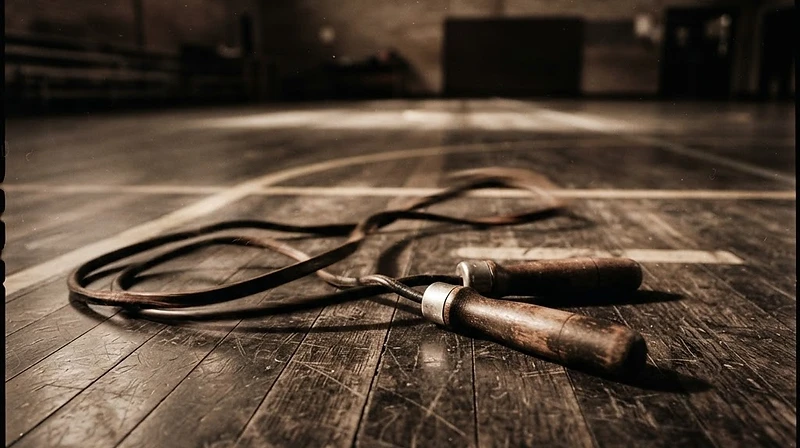
Jump Rope
The cheapest gym ever built, and the fastest way back to coordination.
But first, a little context and history...
The jump rope is older than recorded history. The earliest depictions appear in Egyptian murals dating to around 1600 BCE, where children are shown leaping over a swinging rope. Similar traditions appear in ancient China, where ropes were made from hemp and used in both children's games and military conditioning. The practice spread through medieval Europe as a pastime for both children and adults, and by the 18th century it had become a staple of street culture in port cities, where sailors used spare rigging lines to stay fit between voyages.
The jump rope's modern identity was forged in two distinct communities. In boxing gyms, the rope became the cornerstone of footwork training — Sugar Ray Robinson and Muhammad Ali made it synonymous with agility, and the image of a fighter skipping rope in a sweat-soaked gym is one of the most enduring icons of athletic training. In Black communities across the American South and later the urban North, jump rope evolved into 'Double Dutch,' a rhythmic, two-rope tradition that became a cornerstone of playground culture and, eventually, a competitive sport with its own world championships.
The fitness boom of the 1970s and 1980s elevated the jump rope from playground toy to serious training tool. Studies confirmed what boxers had known for decades: ten minutes of jumping burns more calories than thirty minutes of jogging, while building coordination, bone density, and cardiovascular endurance. The introduction of weighted handles, speed cables, and beaded ropes expanded the tool's range, and by the 2000s, competitive jump rope had grown into an international sport with speed, freestyle, and double-under categories.
For the empty nester, the jump rope offers an almost perfect entry point back into fitness. It requires minimal space, minimal equipment, and minimal time — a fifteen-minute session delivers a complete cardiovascular workout. The learning curve is gentle at first, the equipment costs less than a movie ticket, and the progression from basic bounce to crossover to double-under provides a tangible, measurable sense of skill acquisition that walking or cycling simply cannot match.
“Ten minutes of rope beats thirty minutes of road — and it teaches your feet to listen.”
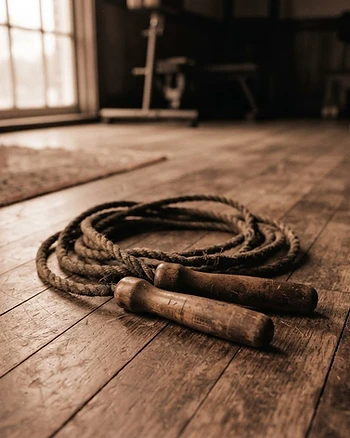
What to gather
A graded list of gear — from the first honest kit to the tools of a life in the craft. The Novice kit is free; the deeper tiers open with membership.
Novice
The first kit — enough to begin honestly.
Expert
The equipment of a life in the craft.
Coming soon
From novice to proficient
A thirty-day passage. Each node is a day. The terracotta fill marks the ground you have already covered.
Learn the fundamental jump rope stance and the basic bounce technique to build rhythm.
YouTubeMastering the Basic Bounce
12 Minute AthleteHow did your calves feel after the first session, and did you find a consistent rhythm?
Saved locally to your device


How the cohort practices today
The pulse is quiet — for now.
Be the first to document your Jump Rope journey with #EmptyNexxter.