
Judo
Master the gentle way: where leverage becomes grace and every fall is a lesson in resilience.
But first, a little context and history...
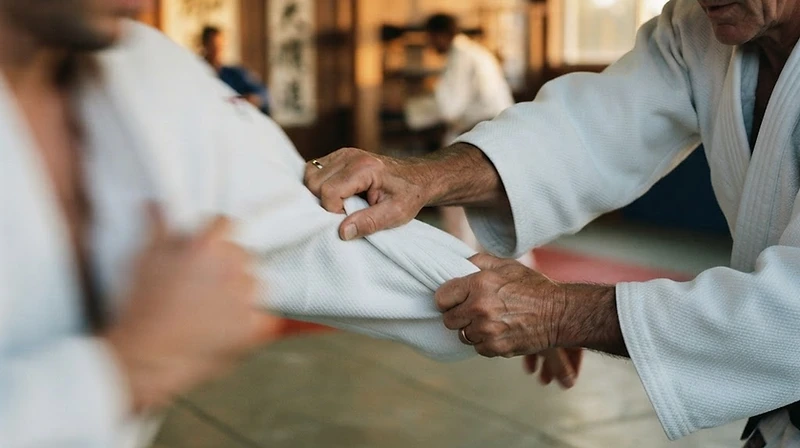
Judo is far more than a martial art; it is a profound study of physics, balance, and the human spirit. At its core, the practice relies on three fundamental pillars: the grip, which establishes connection; kuzushi, the art of breaking an opponent's balance; and the throw, which utilizes an adversary's momentum against them. Practitioners require only a traditional cotton gi, a clean tatami mat, and a willingness to learn. For the Gen X empty nester, judo offers a rare intersection of intellectual engagement and physical vitality. It is a pursuit that demands total mindfulness, effectively quieting the noise of daily life as one navigates the technical complexities of movement and control.
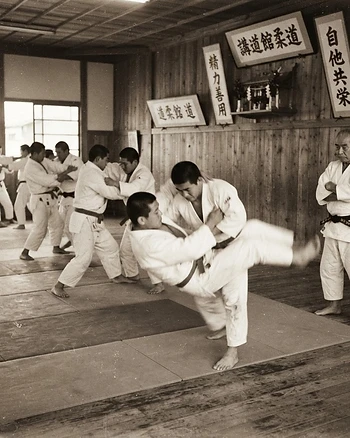
The lineage of judo traces back to the various styles of classical jujutsu once utilized by the samurai of feudal Japan. These ancient systems were designed for battlefield survival, often focusing on joint locks and striking. In 1882, a visionary educator named Jigoro Kano revolutionized these traditions at his newly founded Kodokan Institute in Tokyo. He purged the more dangerous techniques, refining the art into a pedagogical system aimed at self-improvement and community betterment. Kano’s philosophy of 'maximum efficiency, minimum effort' transformed the dojo into a sanctuary for disciplined physical education, making the practice accessible to civilians for the first time.
Following its inception, judo experienced a rapid global expansion. Kano championed the sport as a vehicle for international diplomacy and personal development, touring Europe and the United States to demonstrate its effectiveness. This missionary zeal culminated in the craft's inclusion in the 1964 Tokyo Olympic Games, a milestone that cemented its status as a premier global sport. Today, practitioners span from competitive elite athletes to veteran hobbyists. The rise of the Masters’ competitive circuit, which hosts tournaments for those over the age of thirty, ensures that one never truly outgrows the challenge of the mat.
Modern judo retains a strict adherence to etiquette and tradition, which provides a grounding rhythm for those adjusting to the quietude of an empty nest. Entering a dojo requires a bow, a silent acknowledgment of the training partners and the space itself. This structure provides a psychological anchor, fostering a sense of belonging within a diverse community. Whether practicing intricate groundwork known as ne-waza or refining standing techniques, the judoka engages in a constant dialogue with their own physical limitations and capabilities. There is a quiet beauty in learning to fall correctly; it teaches the body how to recover and the mind how to remain calm under pressure.
For the adult learner, judo serves as a rigorous cardiovascular workout that prioritizes technique over raw athletic dominance. You will find that your existing life experience—patience, observation, and the ability to adapt to sudden changes—serves as a distinct advantage on the mat. You learn to listen to the tension in an opponent's arm and interpret their intentions long before they initiate a movement. This sensory awareness improves balance and core strength, benefits that translate directly into better mobility in your daily life. It is a slow, methodical accumulation of skill that respects your timeline.
Equipping oneself for judo is remarkably simple, stripping away the clutter of modern gadgetry. Beyond the gi, which is designed to withstand the rigors of gripping and pulling, all you need is a receptive mindset. Training usually begins with uchi-komi, the repetitive practice of entries into a throw without fully executing the movement. This focus on form allows the body to build muscle memory safely. As you progress, the complexity of the movements becomes a meditation in motion. You are not simply learning to throw another person; you are learning to inhabit your own space with confidence and intentionality.
Ultimately, judo invites the empty nester to reclaim their sense of agency. In a world that often measures worth by productivity or professional achievement, the dojo serves as a place where progress is measured by the clarity of a grip or the precision of a transition. You are invited to remain a student, to embrace the humility of falling, and to find comfort in the gentle way. It is a lifelong journey of refinement, ensuring that your second prime remains characterized by curiosity, strength, and the enduring grace of a discipline well-practiced.
“Judo does not demand youth; it demands presence. The mat offers a lifetime of discovery, proving that true strength lies in fluidity, not force.”
What to gather
A graded list of gear — from the first honest kit to the tools of a life in the craft. The Novice kit is free; the deeper tiers open with membership.
Novice
The first kit — enough to begin honestly.
From novice to proficient
A thirty-day passage. Each node is a day. The terracotta fill marks the ground you have already covered.
Understand the craft: the grip, the kuzushi, the throw, the calm. Tour the gi and the dojo. Today is orientation; the move begins tomorrow.
YouTubeThe Craft and the Gentle Way
KO AcademyReflect on the philosophy of 'The Gentle Way' (Judo). How does the concept of using an opponent's energy against them change your perspective on conflict?
Saved locally to your device


How the cohort practices today
The pulse is quiet — for now.
Be the first to document your Judo journey with #EmptyNexxter.