
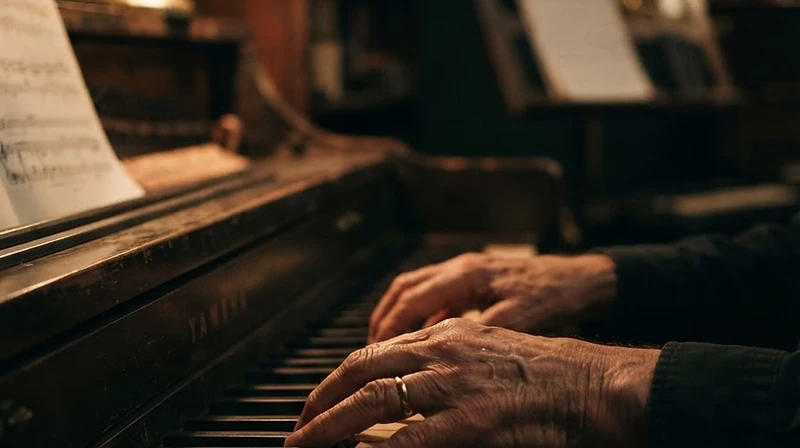
Jazz Theory & Improvisation
Learning the rules deeply enough to break them in real time.
But first, a little context and history...
Jazz was forged in the creole crossroads of late-19th-century New Orleans, where ragtime's syncopation met the blues' bent notes and brass-band discipline met funeral-march grief. It was the first music to treat improvisation not as ornament but as the point.
To improvise is to compose at the speed of feeling. The theory — ii-V-I, the modes, tritone substitution — is not a cage but a vocabulary. You learn it so thoroughly that, in the moment, you forget it and play what you hear.
For the adult learner, jazz offers a particular gift: it rewards a lifetime of listening. The forty years of records you already carry are not a deficit; they are the raw material.
“Jazz is the sound of practice forgetting itself.”

What to gather
A graded list of gear — from the first honest kit to the tools of a life in the craft. The Novice kit is free; the deeper tiers open with membership.
Novice
The first kit — enough to begin honestly.
From novice to proficient
A thirty-day passage. Each node is a day. The terracotta fill marks the ground you have already covered.
Identifying the distinguishing rhythmic and harmonic features that separate jazz from classical traditions.
Jazz Fundamentals: Vocabulary and Stylistic Auditing
Which specific jazz stylistic nuance felt the most counter-intuitive compared to your existing musical training?
Saved locally to your device


How the cohort practices today
Finally hearing the ii-V-I instead of counting it. Something unlocked this week.