
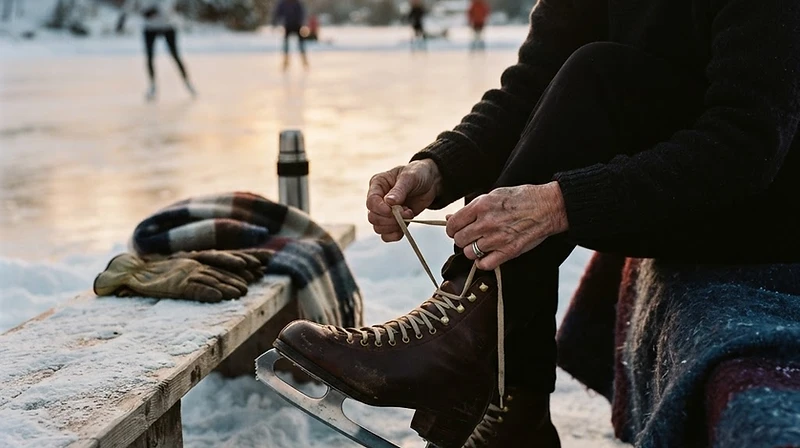
Ice Skating
Master the art of the blade: rediscover the quiet, rhythmic grace of gliding across the winter ice.
But first, a little context and history...
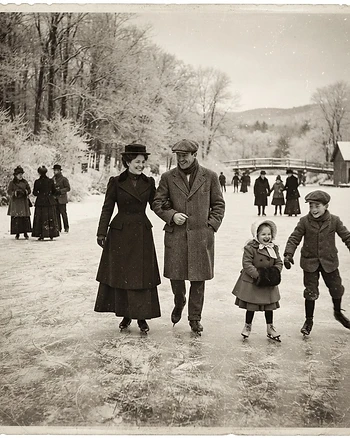
Long before skating became a disciplined sport or a spectator spectacle, it was a necessity of northern survival. In the 13th century, residents of the Low Countries navigated frozen canals by lashing polished shank bones of cows or reindeer to their boots, using wooden poles to propel themselves forward. This rudimentary mobility allowed merchants and travelers to traverse the Dutch waterways during the harshest winter months. By the 16th century, these bone blades were gradually replaced by iron runners, a development that allowed for greater speed and the introduction of the first rudimentary skating maneuvers. The humble canal commuter had inadvertently set the stage for a global pursuit. The transformation of skating from basic transportation to high art occurred in the mid-19th century, led by the American dancer Jackson Haines. Rejecting the rigid, stiff postures favored by the British skating societies of his day, Haines incorporated balletic grace and rhythmic movement into his performances. His 1865 tour across Europe revolutionized the activity, turning the rink into a stage for fluid, interpretive expression. Haines proved that the blade was not merely a tool for speed, but an instrument for artistic grace. Following this, the invention of the all-steel blade in 1914 by the John Wilson company refined the mechanics of the sport. By integrating a singular piece of hardened steel with a leather boot, manufacturers provided skaters with the control necessary to execute complex edge work and spins. This era solidified the design of the modern figure skate, incorporating the iconic toe pick that allows for stability during takeoffs and complex pivots. Today, ice skating offers a unique sanctuary for the empty nester, standing as a meditative exercise that rewards patience and precise physical alignment. Unlike high-impact sports, skating is remarkably kind to the joints when approached with intentionality, emphasizing core strength and balance over explosive force. It encourages a specific kind of mindfulness; the ice demands your full attention, effectively quieting the distractions of modern life. For those entering their second prime, the hobby provides a rare combination of aerobic conditioning and aesthetic satisfaction. Whether you choose to frequent a polished indoor rink or wait for the rare magic of a local pond freezing over, the equipment is simple: a sturdy pair of supportive skates, a warm set of moisture-wicking layers, and a pair of gloves to protect against the inevitable tumble. As you push off from the boards, you are participating in a tradition that spans centuries, connecting your own steady rhythm to the long heritage of the blade. It is a pursuit that does not ask for perfection, but only for presence. Each lap around the rink serves as a reminder that it is never too late to learn how to move with grace, finding freedom in the glide and clarity on the edge.
“To skate is to find a singular equilibrium; it is a conversation between your center of gravity and the unforgiving, beautiful surface of the ice.”
What to gather
A graded list of gear — from the first honest kit to the tools of a life in the craft. The Novice kit is free; the deeper tiers open with membership.
Novice
The first kit — enough to begin honestly.
Advanced
The serious tools of a committed hand.
Coming soon
Expert
The equipment of a life in the craft.
Coming soon
From novice to proficient
A thirty-day passage. Each node is a day. The terracotta fill marks the ground you have already covered.
Understand the craft: the blade, the edge, the ice, the glide. Tour the rink and the skate. Today is orientation; the glide begins tomorrow.
YouTubeThe Craft and the Ice
Coach Mary Figure SkatingReflect on your first impression of the ice surface. How did it feel to stand on the blades for the first time compared to walking on solid ground?
Saved locally to your device


How the cohort practices today
The pulse is quiet — for now.
Be the first to document your Ice Skating journey with #EmptyNexxter.