
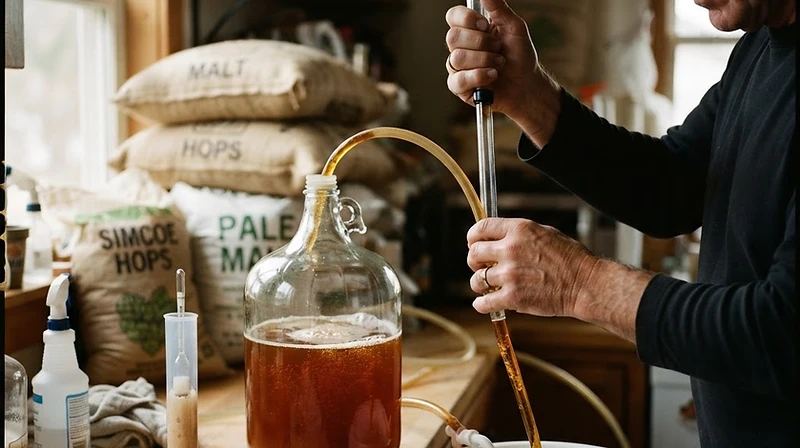
Homemade Craft Beer
Master the alchemy of grain and hop: a meditative pursuit for the modern brewer.
But first, a little context and history...
At its core, homebrewing is a masterclass in controlled biology. It involves extracting sugars from malted grains through mashing, boiling this liquid with hops to impart flavor and stability, and finally, introducing yeast to catalyze the fermentation process. What begins as a collection of raw agricultural ingredients slowly transforms, through time and temperature regulation, into a complex beverage that reflects the brewer’s own palate. For the empty nester, this hobby provides a meaningful intersection of technical precision and artistic intuition, occupying the newly quiet hours with productive, sensory-rich activity. The narrative of beer begins in the cradle of civilization. Archaeological evidence from ancient Mesopotamia reveals that Sumerian brewers in 5000 BCE understood the fundamental principles of grain fermentation. These early practitioners viewed beer as a divine gift, often documented in hymns dedicated to Ninkasi, the goddess of brewing. Over millennia, this knowledge migrated across continents, eventually reaching medieval Europe. In 1516, the Bavarian Duke Wilhelm IV enacted the Reinheitsgebot, or Purity Law, which mandated that beer consist solely of water, barley, and hops. This decree effectively established the standardized foundations of modern brewing, ensuring quality and consistency that defined European beer culture for centuries to come. The transition to the modern homebrewing movement was significantly bolstered by legislative shifts in the United States. During the mid-20th century, home production remained in a legal gray area, but the passage of HR 1337 in 1979, signed into law by President Jimmy Carter, finally legalized homebrewing on a federal level. This legislative milestone ignited a renaissance of interest, leading to the birth of the American craft beer movement. Visionaries like Charlie Papazian championed the accessibility of the craft, encouraging individuals to see brewing not as a restrictive industrial process, but as an approachable household skill. Today, this hobby is more accessible than ever, requiring only a modest inventory of equipment. New brewers typically start with a 'kit'—a stainless steel kettle, a fermentation vessel, a thermometer, an airlock, and a sanitizing solution. While the barrier to entry is low, the ceiling for mastery is incredibly high. One can spend a lifetime experimenting with grain bills, yeast strains, and hop varieties, constantly refining their approach to achieve the perfect balance of bitterness, aromatics, and mouthfeel. There is a profound sense of satisfaction in managing a brew from grain to glass. It requires a quiet focus that is particularly suited to the empty nester lifestyle. As you monitor the boil or track the steady rhythm of the airlock, the world outside fades, leaving only the immediate, tactile reality of the craft. It encourages a slower pace, demanding the patience to wait for fermentation to complete and for the final product to carbonate. This rhythmic dedication to the process offers a grounding influence, turning the kitchen into a personal laboratory where one can explore the limits of their own creativity. Ultimately, homebrewing is an invitation to celebrate the fruits of your labor. Whether you are crafting a crisp pilsner to pair with a summer evening or a robust stout for the winter months, the reward is both in the experience of making and the communal act of sharing. It is a hobby that honors the long history of human innovation while offering a fresh, engaging challenge for your next chapter.
“Brewing is both an exacting science and a creative escape—the patience you cultivate in the kettle eventually spills over into your daily life.”
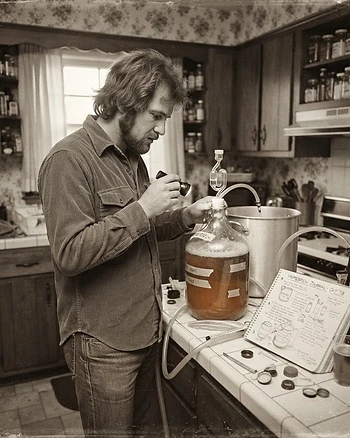
What to gather
A graded list of gear — from the first honest kit to the tools of a life in the craft. The Novice kit is free; the deeper tiers open with membership.
Novice
The first kit — enough to begin honestly.
Expert
The equipment of a life in the craft.
Coming soon
From novice to proficient
A thirty-day passage. Each node is a day. The terracotta fill marks the ground you have already covered.
Understand the craft: the mash, the wort, the pour, the yeast. Tour the gear and the recipe. Today is orientation; the brew begins tomorrow.
YouTubeThe Craft and the Kettle
American Homebrewers AssociationReflect on the equipment you currently have available. How does understanding the basic components of a brew day change your perspective on the gear you need?
Saved locally to your device


How the cohort practices today
The pulse is quiet — for now.
Be the first to document your Homemade Craft Beer journey with #EmptyNexxter.