
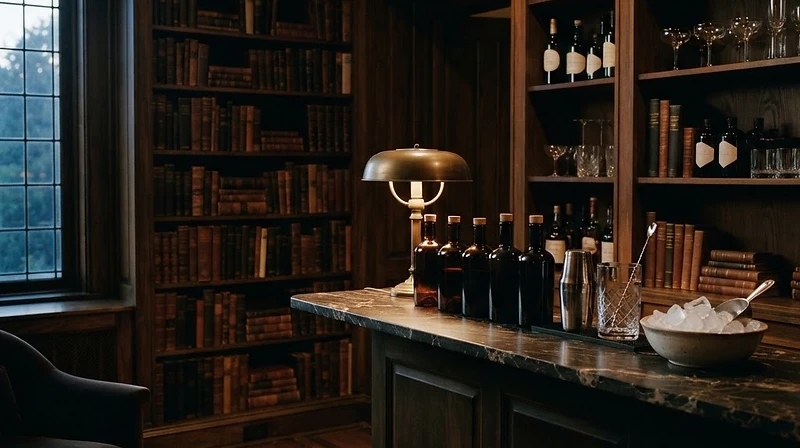
Home Bartending & Mixology
A drink is a formula, not a recipe — spirit, sugar, water, bitter, and the hand that balances them.
But first, a little context and history...
The word arrived before the profession. In May 1806 a New York newspaper, answering a reader's question, defined the cocktail as a stimulating liquor "composed of spirits of any kind, sugar, water and bitters" — and with that one sentence the formula for half the drinks in this archive was set. Everything since is variation: which spirit, which sugar, how much water, which bitter, and how it is chilled.
Punch came first, and it ruled for a century: a bowl of spirit, citrus, sugar, spice and water, mixed in quantity and served to a company. The single glass replaced the bowl through the nineteenth century as ice became cheap and bars became factories of individual drinks. In 1862 the American bartender Jerry Thomas published the first real bartender's manual, and for the first time the recipes and the techniques were written down together — the suggestion being that this was a discipline worth learning rather than a set of habits.
Prohibition nearly killed the craft in the United States, and what survived was adulterated or sweetened past recognition. The years after repeal produced two opposite reactions: the tiki bar, which hid rum in elaborate, layered, fantastically garnished drinks, and a long, quiet decline in which the cocktail became something poured from a mix. By the 1970s the martini glass contained very little vermouth and the whiskey sour contained no whiskey worth naming.
The revival that began in the 1990s and matured in the 2000s was essentially archival. Bartenders went back to the printed manuals, fixed the proportions, learned why a Daiquiri is shaken and a Manhattan is stirred, and insisted that citrus be squeezed the same day. What emerged is the most useful thing the craft has ever given a home drinker: a formula you can reason about instead of a list you have to memorise.
The formula is simple enough to write on a card. A drink is spirit, sugar, water and bitters, and the sugar-water part is there to make the spirit drinkable. Sours — the Daiquiri, the Margarita, the Whiskey Sour — run spirit, citrus and syrup in roughly two-one-one. Old Fashioneds run spirit, a little syrup, bitters, and dilution. Negronis run three equal parts and rely on restraint. Once you can taste those ratios, you can fix a drink without a recipe and invent one without fear.
What separates a home bartender from someone with a bottle of gin is not equipment but consistency: measuring instead of pouring freehand, chilling the glass, using enough ice, tasting before serving. The glamour is misleading. Every professional drink you have enjoyed was made by someone who repeatedly did modest things correctly, in the same order, for hours.
A caveat worth stating plainly: this is a lab about skill, not volume. The drinks get made, tasted, judged and mostly dumped. A bartender's technique is learned by repeating a drink and comparing it, which means a lot of half-finished cocktails going down the sink. Measure, taste, note, and keep the evening short.
“Every professional drink you have enjoyed was made by someone who repeatedly did modest things correctly, in the same order, for hours.”
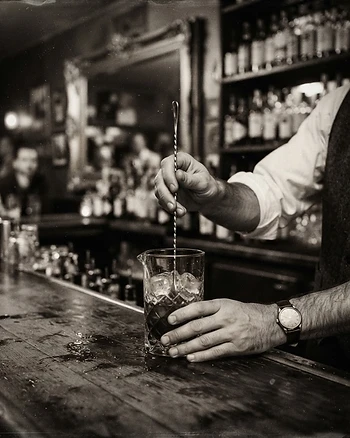
What to gather
A graded list of gear — from the first honest kit to the tools of a life in the craft. The Novice kit is free; the deeper tiers open with membership.
Novice
The first kit — enough to begin honestly.
From novice to proficient
A thirty-day passage. Each node is a day. The terracotta fill marks the ground you have already covered.
A tour of easy classics so you can see that almost all of them are the same four ingredients in different proportions.
YouTubeTen Drinks, One Set of Skills
Steve the BartenderPick the two drinks from this video you would most want to make well. What do they have in common?
Saved locally to your device


How the cohort practices today
The pulse is quiet — for now.
Be the first to document your Home Bartending & Mixology journey with #EmptyNexxter.