

Hang Gliding
Master the art of silent flight: where human curiosity meets the boundless grace of a thermal.
But first, a little context and history...
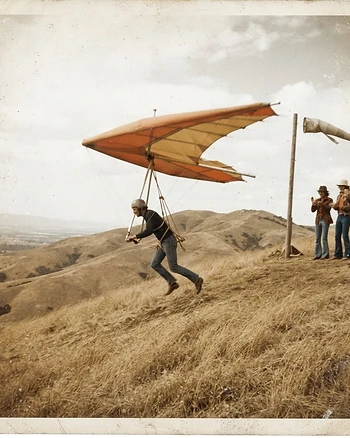
Hang gliding is more than a sport; it is an intimate conversation with gravity. At its core, the practice involves a pilot suspended in a prone harness beneath a high-performance airfoil, seeking lift from rising columns of warm air known as thermals. By navigating these currents, pilots can soar for hours, traversing vast distances across mountain ranges and coastal cliffs. It represents the purest realization of the ancient human dream to leave the ground under one's own power. For the empty nester, this hobby offers a unique blend of intellectual engagement and physical grace, demanding a sharp mind to interpret weather patterns while providing a serene, meditative experience in the clouds. The lineage of this pursuit begins with the tireless efforts of Otto Lilienthal, the 'Glider King' of Germany. During the late 19th century, he completed over 2,000 flights in gliders he designed himself, proving that human flight was possible through careful observation of avian wings. Though he perished in 1896, his meticulous documentation laid the foundation for aerodynamics. Following his path, the mid-20th century saw a leap in engineering when NASA engineer Francis Rogallo patented the flexible wing in 1948. His design was originally intended for spacecraft recovery, but its simplicity and portability eventually caught the eye of visionaries who saw the potential for personal recreation. The transition to a modern recreational sport gained significant momentum in the 1970s, anchored by figures like Bill Moyes. Moyes helped transition the craft into a reliable, foot-launched experience, moving beyond crude experimental frames to refined, high-tensile aluminum and sailcloth structures. This era, famously centered in the coastal hills of California and the mountain ridges of Australia, turned hang gliding into a cultural phenomenon. Enthusiasts began to push the boundaries of what was possible, moving from brief hops down dunes to cross-country flights covering hundreds of miles. Today, the equipment has reached an incredible state of sophistication. Modern gliders, often referred to as topless or rigid-wing gliders, utilize advanced carbon-fiber composites to maximize their glide ratio and speed. Pilots wear streamlined harnesses that reduce drag, and safety remains paramount through the use of reserve parachutes and precision-engineered helmets. Learning to fly is a structured process that begins at certified schools under the guidance of expert instructors. These mentors lead students through ground handling, ridge soaring, and eventually high-altitude launches, ensuring that safety and proficiency grow hand-in-hand. For those of us entering our second prime, this activity acts as an ideal intellectual challenge. It requires studying meteorology, fluid dynamics, and flight theory, keeping the brain active and engaged. Physically, it is low-impact but requires enough agility to manage the launch and landing. The payoff is a profound perspective shift, where the worries of the world literally shrink beneath your feet as you find your place in the vast, open expanse of the sky. It is a pursuit that welcomes the measured, thoughtful approach of a seasoned adult, promising a lifetime of discovery from the vantage point of the birds.
“The sky does not distinguish between generations; it only rewards those who possess the patience to read the invisible currents of the air.”
What to gather
A graded list of gear — from the first honest kit to the tools of a life in the craft. The Novice kit is free; the deeper tiers open with membership.
Novice
The first kit — enough to begin honestly.
From novice to proficient
A thirty-day passage. Each node is a day. The terracotta fill marks the ground you have already covered.
Understand the craft: the wing, the thermal, the glide, the launch. Tour the gear and the sky. Today is orientation; the flight begins tomorrow.
YouTubeThe Craft and the Sky
Andre BandarraReflect on the feeling of anticipation for your first flight. What specific aspect of the physics of flight are you most curious to experience firsthand?
Saved locally to your device


How the cohort practices today
The pulse is quiet — for now.
Be the first to document your Hang Gliding journey with #EmptyNexxter.