
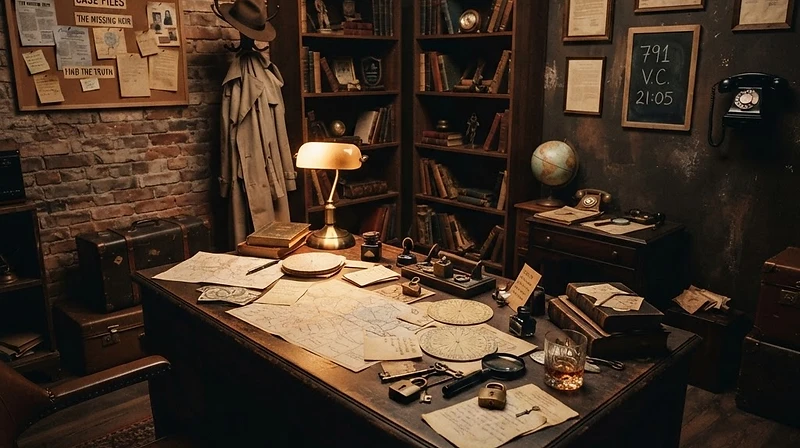
Solving an Escape Room
The clock is ticking, the room is locked, and the only way out is through each other.
But first, a little context and history...
The escape room is among the youngest hobbies in the archive — barely two decades old — yet it draws on cognitive traditions stretching back millennia. Its direct ancestor is the 'room escape' genre of video games, pioneered in 2004 by Toshimitsu Takagi's 'Crimson Room,' a Flash game that trapped players in a single locked space with nothing but their wits and a handful of hidden objects. Takagi's creation distilled the adventure game to its purest mechanic: observe, deduce, combine, escape.
The leap from screen to physical space came in 2007, when Kyoto-based SCRAP Entertainment opened the first live-action escape room, 'Real Escape Game,' in a Kyoto bar. Founder Takao Kato, inspired by mystery novels and interactive theater, wanted to create an experience where players were the protagonists. The concept spread with extraordinary speed: by 2012, escape rooms had reached Budapest, where the European market exploded, and by 2015 there were estimated to be over 2,800 rooms worldwide. Today that number exceeds 50,000 across more than 80 countries.
What makes escape rooms culturally interesting is their synthesis of ancient and modern. The puzzles themselves — ciphers, hidden compartments, symbol matching, mechanical locks — draw from the same well as Renaissance cryptography, Victorian parlor games, and the locked-room mysteries of Edgar Allan Poe and John Dickson Carr. But the social architecture is distinctly modern: escape rooms are among the few structured recreational activities that demand genuine real-time collaboration among strangers or friends, testing communication under artificial pressure.
The hobby's appeal for empty nesters is specific and powerful. After decades of professional problem-solving, the cognitive pleasure of a well-designed puzzle remains — but the social dimension is what makes it sticky. Escape rooms offer a low-stakes arena to practice the collaborative skills that careers demanded but rarely rewarded: clear communication, role assignment, managing frustration, and the willingness to say 'I'm stuck' out loud.
“The lock doesn't care how smart you are. It cares whether your team can talk.”
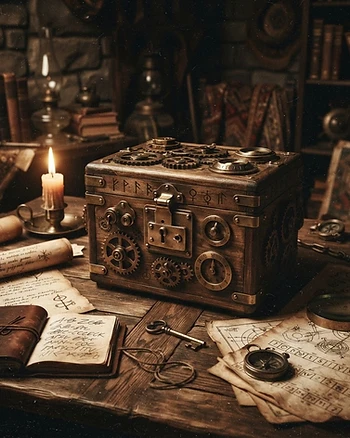
What to gather
A graded list of gear — from the first honest kit to the tools of a life in the craft. The Novice kit is free; the deeper tiers open with membership.
Novice
The first kit — enough to begin honestly.
From novice to proficient
A thirty-day passage. Each node is a day. The terracotta fill marks the ground you have already covered.
Learning how to scan a room systematically to identify potential clues and hidden objects.
YouTubeThe Detective Mindset
Bamsi Gaming 2.0What is your personal strategy for searching a new environment?
Saved locally to your device


How the cohort practices today
The pulse is quiet — for now.
Be the first to document your Solving an Escape Room journey with #EmptyNexxter.