
Curling
The roaring game — forty-four pounds of granite, twenty minutes of patience, and a broom that means more than you think.
But first, a little context and history...
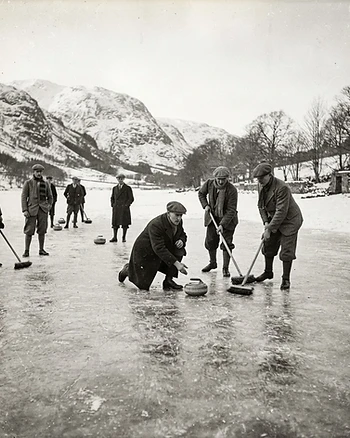
Curling is one of the few sports with receipts. A granite stone recovered from a drained pond at Dunblane carries the date 1511 and the name of its owner — the oldest surviving evidence of a game Scots were already playing badly enough to argue about. By the 1600s it had spread from the lochs into organised club play, and the world's oldest curling club, the Kilsyth Curling Club, was founded in 1716 and still meets. The stones themselves came from Ailsa Craig, a granite plug of rock rising out of the Firth of Clyde whose blue hone granite shrugs off water and travels true. When the island's quarry closed, the sport quietly rationed a finite supply of rock for generations.
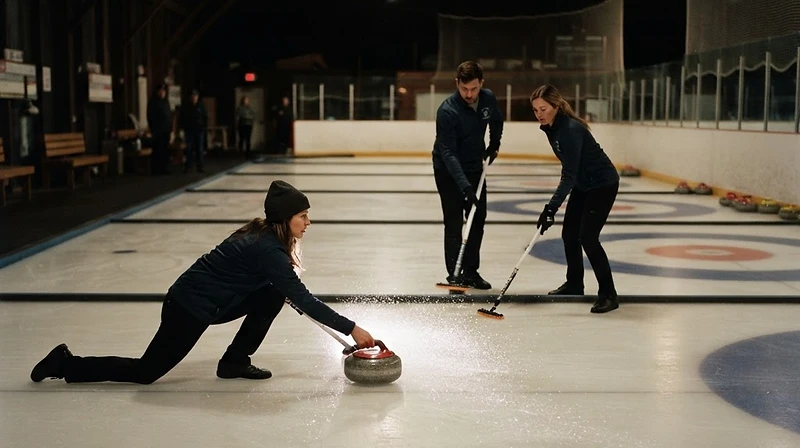
The game's poetry comes from its constraints. Two teams, four players each, throw eight stones apiece down a sheet of ice forty-four metres long. A 44-pound stone, pushed from a hack with a gentle turn of the wrist, curls its path as it slows. Two sweepers brush the ice ahead of it, warming and smoothing the pebble, coaxing the rock a little straighter and a little farther. Every thrown stone is a negotiation between the weight you gave it and the line you gave it — and then, once released, between two people with brooms and a captain in the house calling the shot.
Called the Roaring Game for the sound of granite travelling over pebbled ice, it crossed the Atlantic with Scottish emigrants and took root hardest in Canada, where it became a national winter ritual. It appeared as a demonstration sport at the 1924 Chamonix Olympics and became a full medal event in 1998 — and in the years since it has turned out to be one of the great television sports, slow enough to think about, precise enough to gasp at. The etiquette is intact: the losing team buys the drinks, and you call your own fouls.
“Every stone is a promise you make to it at the hack, and then spend twenty seconds trying to keep.”
What to gather
A graded list of gear — from the first honest kit to the tools of a life in the craft. The Novice kit is free; the deeper tiers open with membership.
Intermediate
The upgrades that change how it feels.
Coming soon
Advanced
The serious tools of a committed hand.
Coming soon
From novice to proficient
A thirty-day passage. Each node is a day. The terracotta fill marks the ground you have already covered.
Learn how to safely step onto the ice and move with confidence using proper footwear.
YouTubeIntroduction to Curling Safety and Movement
Curling CanadaHow does the feeling of the ice surface differ from walking on a standard floor?
Saved locally to your device


How the cohort practices today
The pulse is quiet — for now.
Be the first to document your Curling journey with #EmptyNexxter.