
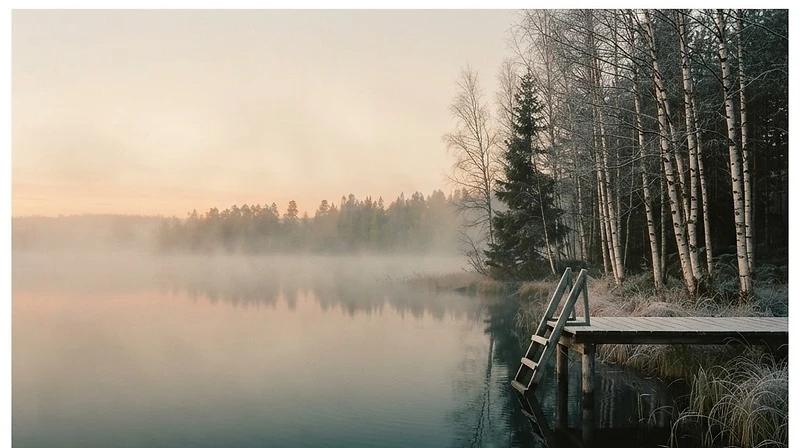
Cold Plunge
Two minutes of cold water that reorganizes the rest of your day.
But first, a little context and history...
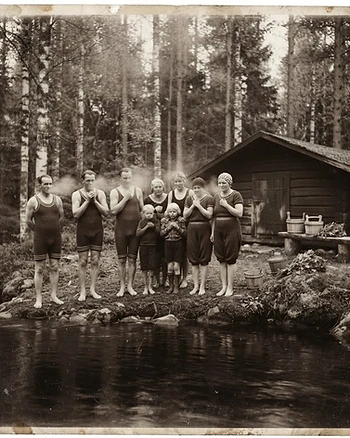
Cold water has been used as medicine for as long as there have been physicians willing to prescribe something unpleasant. Hippocrates wrote of cold baths for fatigue, and Roman bath complexes were built around the frigidarium, the cold room that closed the circuit of heat, sweat and plunge. The practice was never separate from the bathing culture around it: you got hot, you got cold, you sat still, and then you went back to your life.
Northern Europe kept the colder half of that tradition alive without much ceremony. Russian banya and Finnish sauna both end in snow, a lake, or a barrel of near-freezing water, and ice swimming became a winter habit rather than an athletic feat. In the nineteenth century the Bavarian priest Sebastian Kneipp built an entire system of hydrotherapy on cold water, wet wraps and barefoot walking, and his clinics spread the idea through Europe and into American sanatoriums.
What changed in the last decade was the framing. Cold exposure moved from bathing custom and folk medicine into performance culture: the ice bath as recovery tool, the cold shower as discipline, the plunge as a metaphor for doing hard things on purpose. Research has followed unevenly. There is solid evidence for reduced soreness and improved subjective recovery, promising work on mood and alertness, and a great deal of enthusiasm that outruns the data. Nobody has shown that cold water cures much of anything.
The craft, then, is not suffering. It is dose. Water between about 10 and 15 degrees Celsius for two to three minutes is the working range most people can repeat daily without wrecking themselves; colder and shorter works too, and warmer and longer is a reasonable start. The skills that matter are the ones you can practice: a slow exhale before entry, a controlled breath while you are in, an exit you choose rather than one panic chooses for you, and a warm-up that lets the shivering stop on its own. Done that way, the plunge becomes what the bathing cultures always knew it was: a short, repeatable reset, not a stunt.
“The water does not get easier. You get quieter.”
What to gather
A graded list of gear — from the first honest kit to the tools of a life in the craft. The Novice kit is free; the deeper tiers open with membership.
Novice
The first kit — enough to begin honestly.
From novice to proficient
A thirty-day passage. Each node is a day. The terracotta fill marks the ground you have already covered.
Understanding the physiological gasp reflex and learning to override it with initial breath control.
YouTubeThe Cold Shock Response
The Forge Cold PlungeHow did your body react the moment the cold water hit your skin?
Saved locally to your device


How the cohort practices today
The pulse is quiet — for now.
Be the first to document your Cold Plunge journey with #EmptyNexxter.