
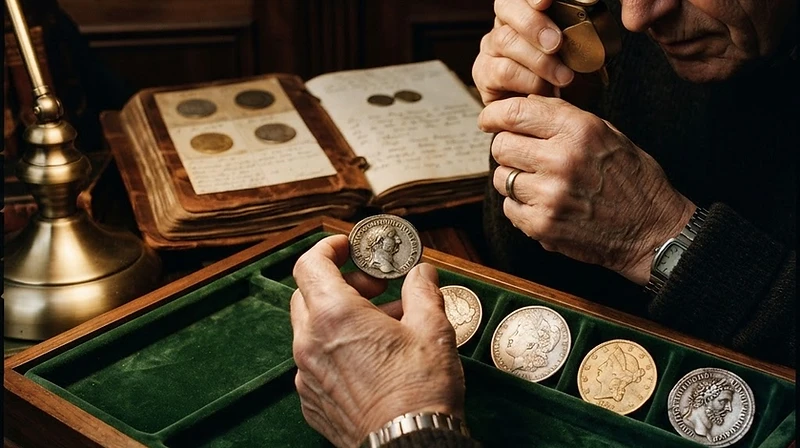
Coin Collecting
Numismatics: The silent weight of history resting in the palm of your hand.
But first, a little context and history...
Numismatics offers far more than a simple accumulation of metal; it provides a profound connection to the physical remnants of the past. When you hold a denarius or an aureus, you are touching an object that once traded hands in the Roman Forum or paid a legionary on the outskirts of an empire. This practice traces its formal lineage to the Roman concept of the 'dactyliotheca,' or coin cabinet, where emperors curated their treasures. It was not until the Renaissance, however, that collecting shifted from a display of raw wealth to a disciplined intellectual pursuit. Petrarch, the famed Italian scholar, is often cited as the 'Father of Numismatics' for his dedicated efforts to catalog and study Roman coinage in the 14th century, establishing the standard for historical inquiry that continues today. By the 19th century, the hobby moved from the exclusive libraries of the elite into the public sphere. The establishment of major institutions, such as the American Numismatic Association in 1891, provided a framework for collectors to authenticate, grade, and exchange their findings. The hobby reached new heights of accessibility as specialized catalogs and professional grading services emerged, moving beyond mere aesthetic appreciation to a rigorous evaluation of strike quality, surface preservation, and historical scarcity. Today, the practice is a blend of forensic science and history. Modern collectors use high-magnification loupes to inspect the intricate details of a mint mark or the microscopic nuances of a strike. Digital databases and registry sets have replaced the traditional wooden cabinet, allowing enthusiasts to build themed collections that span centuries or focus on singular, iconic moments in time. The equipment required is intentionally modest: a high-quality 10x magnification loupe, acid-free archival storage holders, and, perhaps most importantly, a reliable reference text to understand the specific provenance and cultural context of your items. For the Gen X empty nester, numismatics serves as a perfect intellectual outlet during this transition into a quieter chapter of life. It demands a sharp eye and a patient temperament, rewarding the collector with a deepening sense of historical perspective. As your children move toward their own horizons, you can devote the time required to curate a collection that holds genuine archival value. There is a meditative rhythm to cataloging a series or researching the historical significance of a specific issue. It is a hobby that respects your maturity, thrives on your growing curiosity, and offers a legacy that transcends the digital clutter of the modern world. Whether you focus on the bold portraits of Roman emperors or the artistic evolution of 20th-century currency, the craft ensures that history remains a living, breathing reality rather than a forgotten footnote.
“A coin is not merely currency; it is a metallic witness to the empires that fell and the civilizations that once flourished.”

What to gather
A graded list of gear — from the first honest kit to the tools of a life in the craft. The Novice kit is free; the deeper tiers open with membership.
Novice
The first kit — enough to begin honestly.
From novice to proficient
A thirty-day passage. Each node is a day. The terracotta fill marks the ground you have already covered.
Understand the craft: the grade, the patina, the read, the story. Tour the gear and the coin. Today is orientation; the collecting begins tomorrow.
YouTubeThe Craft and the Coin
Big Bear Coin & CollectibleWhat specific aspect of coin history or design sparked your initial interest in starting this collection?
Saved locally to your device


How the cohort practices today
The pulse is quiet — for now.
Be the first to document your Coin Collecting journey with #EmptyNexxter.