
Coffee Roasting
Green beans, heat, and your own palate — the oldest kitchen alchemy, where ten minutes and a thermometer give you coffee no shop can sell.
But first, a little context and history...
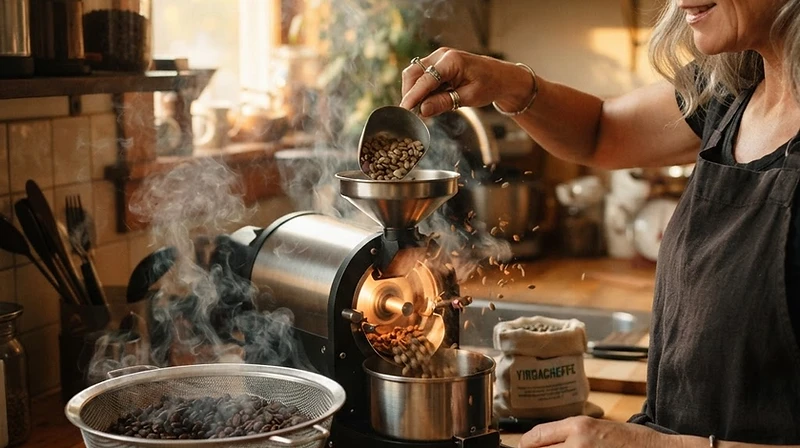
Coffee roasting is the craft of applying heat to green coffee beans until they crack, expand, and develop the complex flavors we recognize as coffee. You start with pale, dense green beans that smell of grass and hay, and you end with dark, fragrant beans that smell of chocolate, caramel, fruit, or smoke — depending on how far you roast them. The transformation is one of the most dramatic in any kitchen. The skill is in controlling the heat, the time, and the moment you stop.
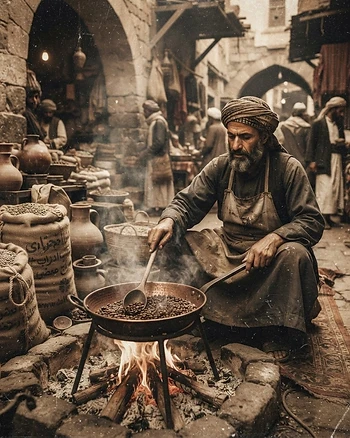
The practice began in the highlands of Yemen in the 15th century, where Sufi monks roasted and brewed coffee to stay awake during nighttime devotions. The drink spread to Mecca and Cairo, and by the 16th century, Ottoman coffee houses were centers of social and political life. The first coffee house in Europe opened in Venice in 1645, and the drink spread rapidly — though not without resistance. In 1675, King Charles II of England tried to ban coffee houses, calling them "places where the disaffected met and spread scandalous reports concerning the conduct of His Majesty." The ban lasted eleven days.
For centuries, coffee was roasted at home or in small shops. Every household that drank coffee owned a roasting pan. The Industrial Revolution changed that: commercial roasting machines appeared in the 19th century, and by the 20th century, most consumers bought pre-roasted, pre-ground coffee in tins. Home roasting nearly disappeared. The first wave of coffee — the Folgers and Maxwell House era — was about convenience, not craft.
The second wave, beginning in the 1960s with Peet's and then Starbucks, brought darker roasts and espresso drinks to the mainstream. The third wave, beginning in the 2000s with roasters like Stumptown, Intelligentsia, and Blue Bottle, treated coffee as an artisanal product — single-origin beans, light roasts, pour-over brewing, and an emphasis on terroir and processing method. Home roasting returned with it, fueled by affordable home roasters, green coffee bean retailers, and online communities.
The equipment ranges from the primitive to the precise. A cast-iron skillet on a stovetop will roast coffee — you stir the beans with a wooden spoon and listen for the cracks. A popcorn popper (the hot-air kind) will roast a batch in under ten minutes. A dedicated drum roaster, with temperature control and a cooling cycle, costs $200 to $2,000 and gives you repeatable results. The green beans cost $5 to $15 per pound — roughly half the price of roasted coffee — and they stay fresh for years, unlike roasted beans, which stale within two weeks.
The craft is in the roast profile. Green coffee goes through two distinct cracks as it roasts. The first crack, around 385°F, is the moment the bean expands and the moisture escapes — the beginning of a light roast. The second crack, around 435°F, is the moment the cell structure begins to fracture — the beginning of a dark roast. The window between the two cracks — the city, city plus, full city range — is where most specialty coffee lives. The roaster's skill is in choosing when to stop, and in the ramp of heat that gets the beans there.
For the empty nester, coffee roasting is a craft that rewards attention and rewards thrift. A pound of green beans costs half what a pound of roasted coffee costs, and it stays fresh until you roast it. The first batch is a smoky experiment on the stovetop. The hundredth is a profile you have dialed in over months, a roast you can repeat, and a cup of coffee that is better than anything you can buy. The bean does not care how old you are. It only cares how carefully you listen for the crack.
“The bean does not care how old you are. It only cares how carefully you listen for the crack.”
What to gather
A graded list of gear — from the first honest kit to the tools of a life in the craft. The Novice kit is free; the deeper tiers open with membership.
Novice
The first kit — enough to begin honestly.
Expert
The equipment of a life in the craft.
Coming soon
From novice to proficient
A thirty-day passage. Each node is a day. The terracotta fill marks the ground you have already covered.
Learn what coffee roasting actually is — the transformation of a pale green seed into a dark, fragrant bean through applied heat. Understand why green beans cost half what roasted beans cost and stay fresh for years.
YouTubeThe Green Bean
Coffee Roasting BasicsReflect on the transformation process: how does the physical change from a green seed to a brown bean alter your perception of coffee as a raw agricultural product?
Saved locally to your device


How the cohort practices today
The pulse is quiet — for now.
Be the first to document your Coffee Roasting journey with #EmptyNexxter.