
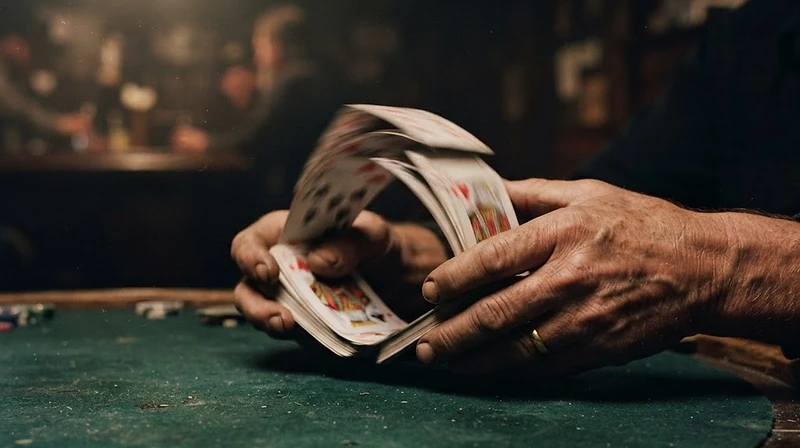
Card Mechanic
Fifty-two pieces of pasteboard, a thousand small lies, and the discipline to make them look like nothing at all.
But first, a little context and history...
Before the word "magician" covered everything, there was a plainer term for a person who could make a deck obey him: a card mechanic. The name came from the trade itself. A mechanic is someone who knows how a thing is built, and the card mechanic knew the deck the way a locksmith knows a lock — where it would bend, where it would lie, and how little effort it took to make it open.
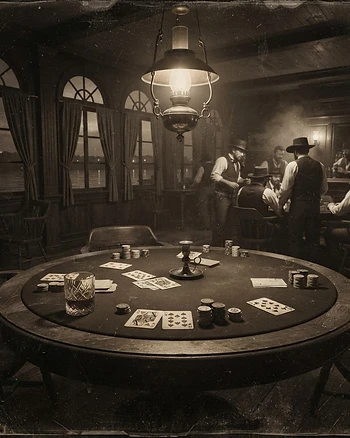
The golden age of the mechanic was not on a stage. It was in the card rooms of the Mississippi riverboats and the back rooms of Western saloons, where a man who could deal second, deal bottom, or shuffle a cold deck out of a stacked pack could take a table without touching a single trick. The trade was practical, unsentimental and, in its way, rigorous: moves were judged on whether they survived a suspicious eye across two feet of green felt, not on whether they looked pretty.
That knowledge got written down exactly once, properly, in 1902. A book called The Expert at the Card Table appeared under the byline S. W. Erdnase — almost certainly a pseudonym — and it described the tools of the trade with a cold engineering precision that no magic book had managed: shuffles that kept the pack intact, the bottom deal, the second deal, the palm, the cull. Nobody has ever established who Erdnase was. He has been proposed as everything from a riverboat professional to a mathematics professor, and the mystery has kept the book in print for more than a century.
What Erdnase described was a trade, not an entertainment. The distinction matters. On the gambling side, mechanics like the still-legendary Steve Forte worked for casinos catching exactly this kind of work, and the modern study of card cheating is largely the study of how good the eye can get. On the performance side, the same moves crossed over into magic, where the stakes became delight rather than money and the technique was pushed further than any card table ever required.
Which is the honest way to study this: as a craft with a divided history. The moves are beautiful, the history is full of thieves, and the only clean use for them today is performance, study and casino protection. Learn them properly, and you will never be fooled by a deck again — including your own.
“Every move you can name is a hundred years old. What is new is the practice room.”
What to gather
A graded list of gear — from the first honest kit to the tools of a life in the craft. The Novice kit is free; the deeper tiers open with membership.
Novice
The first kit — enough to begin honestly.
From novice to proficient
A thirty-day passage. Each node is a day. The terracotta fill marks the ground you have already covered.
What a mechanic actually is: the riverboat and casino trade of controlled dealing, the Erdnase mystery, and why the moves still matter.
YouTubeThe Card Mechanic's World
Los Angeles TimesWhere do you draw the line between studying a sleight and using it?
Saved locally to your device


How the cohort practices today
The pulse is quiet — for now.
Be the first to document your Card Mechanic journey with #EmptyNexxter.