

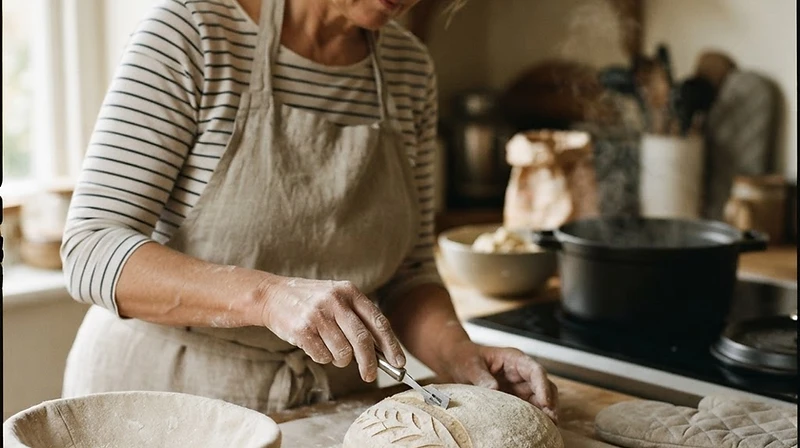
Bread Making
Mastering the alchemy of flour, water, and heat: an ancient rhythm for the modern home.
But first, a little context and history...
Baking bread is a visceral connection to the dawn of civilization. While prehistoric humans likely mashed grains with water to create simple flatbreads, the Ancient Egyptians around 6000 BCE discovered the transformative power of leaven. By observing wild yeast settling into a mixture of flour and water, they learned to trap gas within the dough, creating a lighter, more flavorful loaf. This discovery moved bread from a mere caloric necessity to a foundational cultural artifact that has defined human diets for eight millennia. For the modern empty nester, this process offers a meditative escape from a world of digital noise, grounding the spirit in tactile, rewarding work. The journey of the loaf continues into the 19th century with a pivotal milestone: the 1840 Vienna process. Before this, bakers relied on unpredictable barm or sourdough starters. The development of standardized, commercial yeast in Vienna provided a consistent, reliable method for home bakers to achieve predictable results. This era democratized the kitchen, allowing bread-making to move from professional artisanal guilds into the family home. It established the technical foundation for the crusts and crumb structures we recognize today, proving that science could bolster tradition without sacrificing quality. As the 20th century arrived, the 1930s farm loaf became the standard-bearer for domestic stability. During the Great Depression, home baking was not merely a hobby but an essential act of resilience. Families utilized simple tools—a mixing bowl, a wooden board, and a cast-iron Dutch oven—to feed their households with dignity. This period cemented the image of the home-baked loaf as the ultimate expression of care. Today, we stand on the shoulders of these domestic bakers, applying contemporary techniques like long-term cold fermentation to achieve complex flavor profiles that were once only available to master bakers. Equipping your home kitchen for this craft requires minimal investment. You need a quality digital scale for precision, a bench scraper for handling sticky dough, and a heavy-duty vessel such as a cast-iron Dutch oven to replicate the steamy environment of a professional masonry oven. Unlike the frantic pace of professional kitchens, this hobby invites a slow, deliberate cadence. It suits the empty nester perfectly, as it rewards the patience one has earned through a lifetime of experience. The tactile sensation of kneading—the feeling of gluten strands aligning under your palms—is a sensory reset that connects the baker to every generation that has come before. Mastering bread is not just about the final product; it is about reclaiming the quiet authority of making something essential with your own hands.
“Bread is the most honest work a human can do; it asks only for time, patience, and a bit of flour.”

What to gather
A graded list of gear — from the first honest kit to the tools of a life in the craft. The Novice kit is free; the deeper tiers open with membership.
Novice
The first kit — enough to begin honestly.
From novice to proficient
A thirty-day passage. Each node is a day. The terracotta fill marks the ground you have already covered.
Understand the craft: the flour, the water, the salt, the yeast. Tour the gear and the kitchen. Today is orientation; the loaf begins tomorrow.
YouTubeThe Craft and the Crumb
Little Village HomesteadReflect on the essential ingredients mentioned. How does understanding the role of each component change your perspective on the bread-making process?
Saved locally to your device


How the cohort practices today
The pulse is quiet — for now.
Be the first to document your Bread Making journey with #EmptyNexxter.