
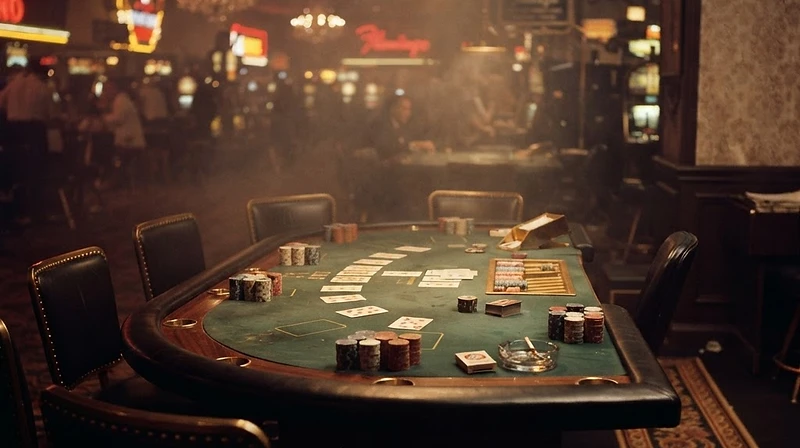
Become a Card Counter
A running total in your head, and the discipline to bet only when it says so.
But first, a little context and history...
For most of the twentieth century, blackjack was assumed to be a losing game played for entertainment. That assumption cracked in 1962, when Edward O. Thorp, a mathematician at MIT, published Beat the Dealer. Thorp had worked through the math with a handheld computer and a collaborator at the university, and the result was a strategy that made the house edge vanish under the right conditions. The book sold in the hundreds of thousands, players flooded Nevada tables, and casinos responded within months: they changed the rules, reshuffled constantly, and then, when that hurt their regular customers, quietly went back and began watching for counters instead.
The core insight was not complicated. A deck is a closed system, and when small cards leave it, the remaining pack favors the player. If you track how many high and low cards have been seen, you know roughly when the composition has turned in your favor. Thorpe's later work with Julian Braun refined the idea into running counts, true counts and betting correlations, and the systems that followed through the 1960s and 70s, Hi-Lo, Hi-Opt, Wong Halves, Ken Uston's team play, refined a few ideas into dozens of dialects of the same language.
What followed was a long, weird arms race. Teams bankrolled by investors played in coordinated shifts. Casinos hired consultants, built surveillance rooms, and developed the software that still reads betting patterns and flags a counter within a shoe or two. Card counting was never made illegal; it is legal everywhere in the United States. Being asked to leave is a private property decision, not an arrest, and most counters eventually learn that the game is played against people watching a screen rather than against a dealer.
The modern counter is not a high roller. Counting is a solved problem: the arithmetic is small, the practice is unglamorous, and the realistic edge for a competent solo player is somewhere between half a percent and one and a half percent, before mistakes. What separates people who last from people who get backed off in a weekend is not memory. It is temperament: betting the ramp when the count says so even when you have lost six hands, sizing stakes to a bankroll, choosing tables with good rules and shallow penetration, and leaving when the conditions are wrong. Thirty days is enough to learn the mechanics and to find out whether you have the patience for the rest.
“The count is arithmetic. The money is temperament.”

What to gather
A graded list of gear — from the first honest kit to the tools of a life in the craft. The Novice kit is free; the deeper tiers open with membership.
Novice
The first kit — enough to begin honestly.
From novice to proficient
A thirty-day passage. Each node is a day. The terracotta fill marks the ground you have already covered.
Understand the core concept of card counting and the Hi-Lo point values.
YouTubeIntroduction to the Hi-Lo System
Blackjack ApprenticeshipWhy does removing low cards from the deck benefit the player?
Saved locally to your device


How the cohort practices today
The pulse is quiet — for now.
Be the first to document your Become a Card Counter journey with #EmptyNexxter.