
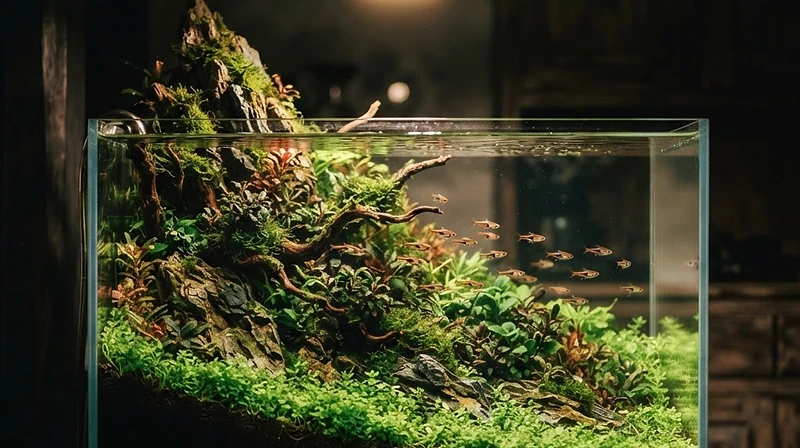
Aquascape
A landscape built in glass and kept alive by patience — composition first, then chemistry.
But first, a little context and history...
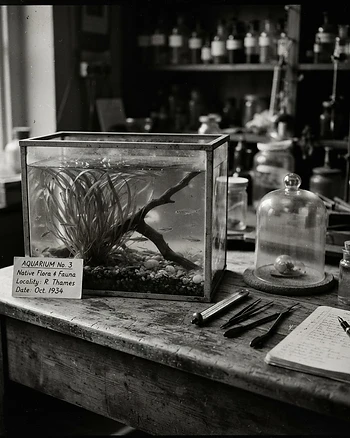
The first aquascapers were not artists but indoor gardeners with a problem: how to keep something alive on a windowsill in a smoky nineteenth-century townhouse. The Wardian case solved it. A sealed glass box built to protect ferns from coal smoke became, by the 1850s, a fashionable object in British drawing rooms, and the notion of a miniature landscape behind glass entered the middle-class imagination. Victorian aquariums followed quickly, stocked with river weed, goldfish and the occasional accidental snail.
The modern discipline has two parents. The first is Dutch. From the 1930s, Dutch aquarists organised associations, judged tanks against written rules, and treated a planted aquarium the way a flower arranger treats a vase: groups of plants in contrasting colour and texture, arranged in terraces, ruthlessly trimmed into shape. Their style survives in competition today, and its logic still governs the best planted tanks — contrast, grouping, and a composition that rewards a second look.
The second parent is Japanese. In the 1990s the photographer Takashi Amano began building tanks he photographed like landscapes: dense carpets, dark aquasoil slopes, stone arranged with the discipline of a dry garden, and a single shoal of small fish suspended in the open water. Amano's Nature Aquarium gave the hobby a visual standard and, crucially, a photographic one — the tank exists to be looked at, and a photograph is how a tank is judged.
The vocabulary came with it. Iwagumi, from the Japanese for rock formation, brings the three-stone compositions of dry stone gardens into the aquarium: one dominant stone, one supporting, one echoing. Because glass is transparent, depth has to be invented — sloping the substrate, grading stone and plant sizes from front to back, and keeping the middle third open.
What separates aquascaping from decoration is that the picture must remain alive. Light, CO2 and nutrients have to be balanced against plant mass; an unbalanced tank grows algae instead of leaves. So the craft has two halves that cannot be separated: the composition, which you will plan on paper before a single drop of water goes in, and the maintenance — trimming, dosing, water changes — which is not chores but the act of keeping the design legible. Thirty days will get a tank planted, cycled and shaped. The picture keeps changing after that, which is the whole reason to keep it.
A note for the honest beginner: the most beautiful aquascapes on the internet are photographs taken on their best day. Every one of them is a working garden that gets trimmed weekly and algae-scraped by hand. This lab teaches the composition first and the chemistry second, because a tank with perfect parameters and no composition is just water.
“A tank with perfect water parameters and no composition is just water. A tank with a composition and no balance is just algae.”
What to gather
A graded list of gear — from the first honest kit to the tools of a life in the craft. The Novice kit is free; the deeper tiers open with membership.
Novice
The first kit — enough to begin honestly.
From novice to proficient
A thirty-day passage. Each node is a day. The terracotta fill marks the ground you have already covered.
The whole discipline in one pass: glass, substrate, stone, plants, and the balance behind them.
YouTubeWhat Aquascaping Actually Is
MJ AquascapingName three aquascapes you have seen and liked. What did each one do with the centre of the frame?
Saved locally to your device


How the cohort practices today
The pulse is quiet — for now.
Be the first to document your Aquascape journey with #EmptyNexxter.